


The Security Debt of Core PHP
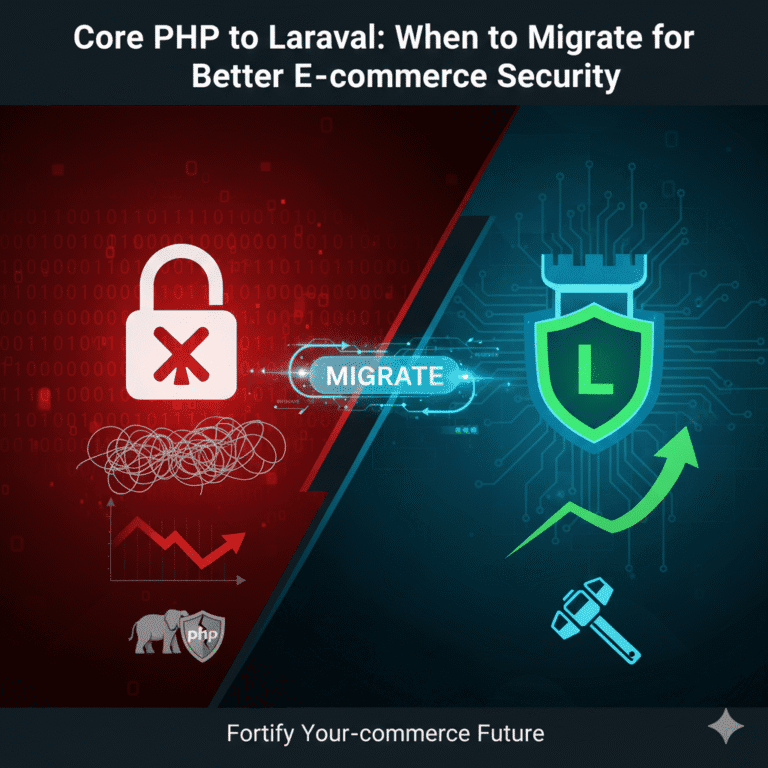
Many e-commerce startups begin their journey using Core PHP—simple, fast, and easy to prototype. However, as the business grows, relying solely on Core PHP for complex, transaction-heavy systems creates what is known as “security debt.”
Core PHP applications lack the automatic, built-in security features that modern frameworks provide. When dealing with customer data, payment information, and inventory, security breaches are existential threats.
Laravel, the most popular PHP framework, offers a structured, MVC-based architecture and robust security out of the box. The question is not if you should move, but when. This guide outlines the critical signs that signal it’s time to move from Core PHP to Laravel to safeguard your e-commerce platform.
5 Crucial Signs It’s Time to Migrate to Laravel
These indicators signal that the security risks of maintaining a Core PHP application outweigh the cost of migration.
Sign 1: You’re Scaling Transactions and User Data
- The Risk: Core PHP often requires developers to manually implement sanitation and validation checks on every single form and user input field. A single oversight can lead to severe security flaws.
- The Laravel Solution: Laravel provides built-in libraries that automatically handle the validation of user inputs, ensuring data is clean before it hits your database. It handles user authentication and session management in a secure, standardized way.
Sign 2: Lack of Built-in Protection Against Common Web Attacks
Protecting against the OWASP Top 10 risks is a full-time job in Core PHP. In Laravel, it’s mostly automated.
- The Risk: Your Core PHP code is highly vulnerable to two major threats:
- Cross-Site Request Forgery (CSRF): An attacker tricks a user into executing unwanted actions (e.g., placing an order, changing a password).
- Cross-Site Scripting (XSS): An attacker injects malicious client-side script into web pages viewed by other users.
- The Laravel Solution: Laravel comes standard with CSRF tokens that are checked on every POST request, completely nullifying most CSRF attacks. It also automatically escapes output (Blade templating engine) to prevent XSS attacks by default.
Sign 3: Database Queries Are Still Being Written Manually
Direct database access is the fastest path to SQL Injection, a catastrophic security failure.
- The Risk: When you write raw SQL queries using basic PHP functions (like mysql_query), you leave your database exposed to SQL Injection attacks if user input isn’t perfectly sanitized.
- The Laravel Solution: Laravel uses the Eloquent ORM (Object-Relational Mapper). Eloquent automatically uses prepared statements, meaning user data is separated from the SQL command structure. This renders typical SQL injection attacks ineffective by default.
Sign 4: Development Efficiency Is Dropping (High Technical Debt)
Poor structure impacts security by making updates, patches, and fixes difficult.
- The Risk: Core PHP applications typically lack structure, leading to “spaghetti code” where security logic is scattered across multiple files. Fixing one bug often creates two new ones, making it hard to apply urgent security patches reliably.
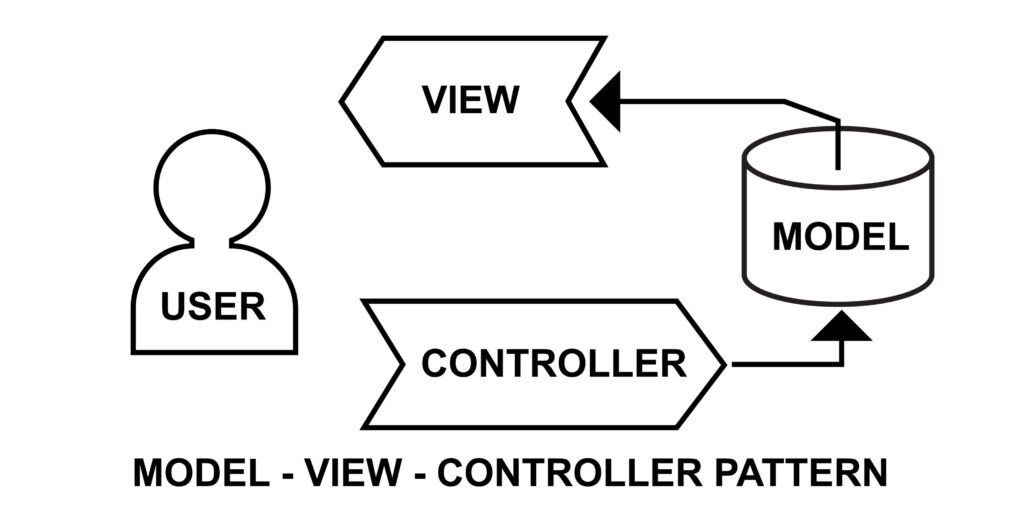
- The Laravel Solution: Laravel forces the use of the Model-View-Controller (MVC) architecture. This separation of concerns ensures that business logic, user interface, and database queries are logically separated, making security auditing, patching, and feature development clean and reliable.
Sign 5: You Need Easy Third-Party Integrations (Payment Gateways)
E-commerce requires integration with complex third-party services.
- The Risk: Integrating complex, security-sensitive APIs (like Stripe, PayPal, or specialized inventory management systems) in Core PHP is tedious and risky, requiring developers to manually handle encryption, authentication, and tokenization.
- The Laravel Solution: Laravel’s robust package ecosystem (Packagist) offers thousands of highly vetted, secure packages for virtually every common service, simplifying secure integration and reducing the chance of developer error.
The Laravel Security Toolkit Advantage
By moving to Laravel, you gain an inherent security layer that allows your developers to focus on features, not constantly re-inventing security wheels:
- Authentication and Authorization: Built-in systems for user sign-up, login, and role management (Gate and Policies).
- Password Hashing: Uses strong, modern, one-way hashing algorithms (like Argon2 or Bcrypt) by default, protecting user passwords from brute-force attacks.
- Secure Routing: Routes can be protected using middleware to ensure only authorized users access certain parts of your e-commerce admin panel.
IV. Conclusion: Secure Your Future Revenue
The decision to move from Core PHP to Laravel is a strategic investment in the future of your e-commerce business. While Core PHP is great for starting, its lack of inherent security features becomes a critical liability as user numbers and transaction volume climb.
When you recognize that manual security implementation is becoming complex, error-prone, or insufficient—especially when dealing with payment gateways and customer data—it is unequivocally time to upgrade to the structured, secure, and sustainable platform that Laravel provides.