


Getting your website to show up high in Google’s search results is super important these days. It’s not just a bonus; it’s something you really need if you want people to see your brand online. It doesn’t matter if you have a business site, an online store, a blog, or a place where you offer services. How well you do in Google’s search results depends a lot on how well you set up your own pages.
On-page SEO is not just about throwing some words into your content, It’s about making your website’s structure, how it feels to use, and how well it works technically better. This way, search engines can easily figure out what your content is about and why it should rank high up.
This guide covers some of the best on-page tricks to help your SEO, get more visibility, and make your marketing plan work better.
What Is On-Page Optimization?
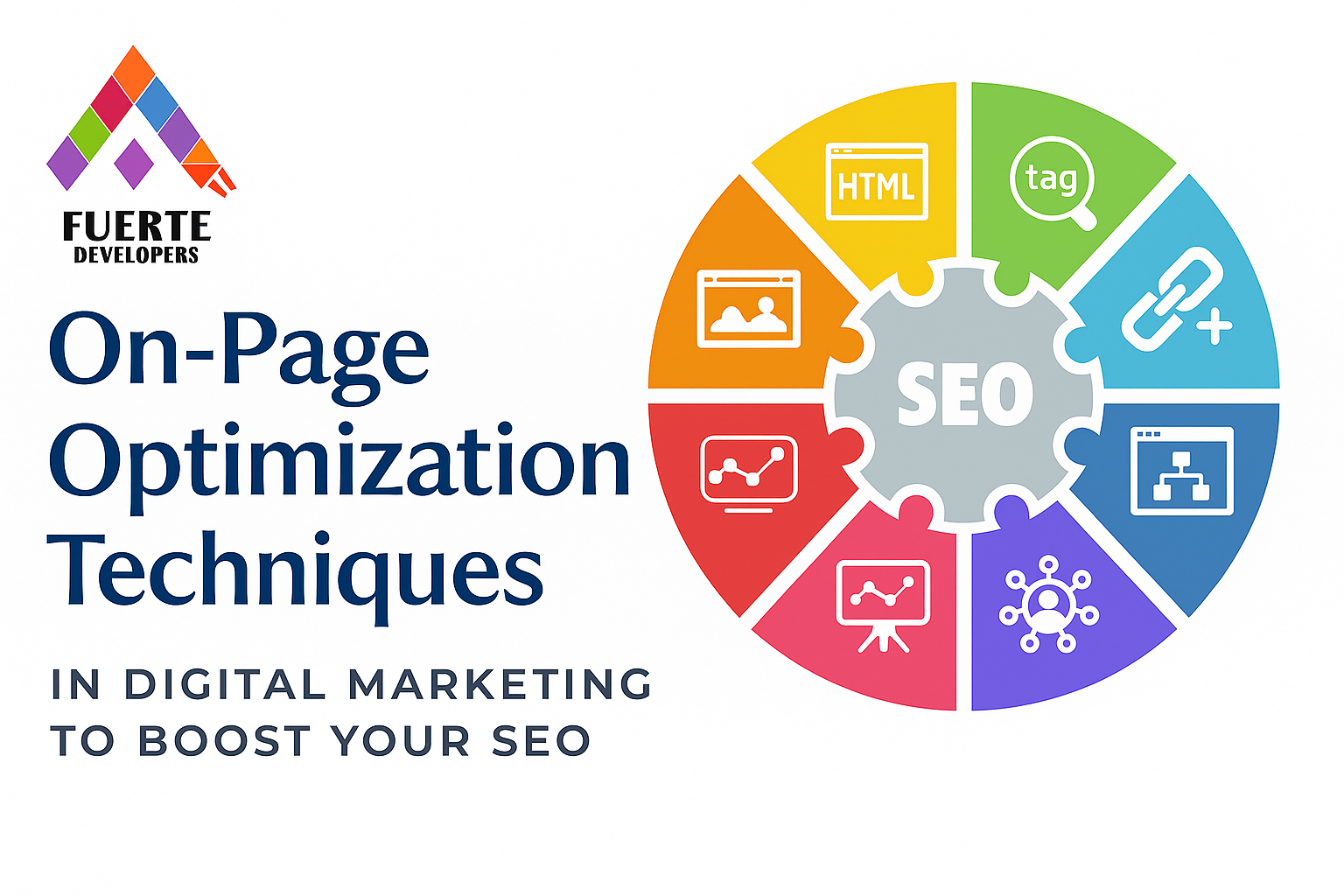
On-page optimization refers to optimizing the elements within a website that you can optimize to improve search rankings. These include:
- Content quality
- Keywords
- Heading structure
- URL formatting
- Meta tags
- Image optimization
- Internal linking
- Mobile responsiveness
- Page speed
- Schema markup
Think of on-page SEO as how your website is built inside. If everything is done right, search engines can easily read and understand what’s on your pages, helping you rank higher and get more visitors.
Why On-Page Optimization Is So Important for SEO
Search engines like Google prioritize three things:
- Relevance
- Quality
- User experience
On-page SEO makes sure your content aligns with these criteria. It helps:
- Improve search rankings
- Increase organic traffic
- Enhance user engagement
- Build content authority
- Reduce bounce rates
- Improve conversion rates
When done right, on-page optimization becomes the base of your whole digital marketing plan.
Top On-Page Optimization Techniques to Boost Your SEO
Let’s check out some useful on-page SEO methods that you should use on every page of your site.
1. Optimize Title Tags for Better Visibility
Your title tag is the first element users and search engines see. It can influence rankings and click-through rates. A well-optimized title tag helps Google understand the page’s content and attracts more clicks from users.
Best Practices:
- Keep it under 60 characters
- Include the primary keyword
- Make it interesting and clear
- Ensure it’s unique for each page
Example:
“On-Page Optimization Techniques to Boost Your SEO in 2025”
2. Write Strong Meta Descriptions That Drive Clicks
Meta descriptions do not directly influence rankings, but they impact CTR and website visibility. It helps them decide whether to visit the page.
Tips for Optimization:
- Keep it between 155–160 characters
- Include a target keyword
- Highlight benefits or solutions
- Encourage users to click with a soft CTA
Example:
“Learn powerful on-page optimization techniques to improve search rankings, increase traffic, and enhance user experience.”
Better meta descriptions mean higher CTR and improved SEO performance.
3. Use Header Tags to Structure Your Content
Well-designed header tags (H1, H2, H3…) can enhance user experience and improve readability and help Google understand your content.
Best practices:
- Use only one H1 that contains the primary keyword
- Use H2 for main sections
- Use H3-H4 for subsections
- Keep headings short easy to understand
- Include keywords naturally
A well-structured page enhances user engagement and helps search engines rank content higher.
4. Create High-Quality, Keyword-Rich Content
Good content is the heart of on-page SEO. High-quality content tends to rank higher and attract more backlinks.
Google wants content that:
- Solves problems
- Answers what people are looking for
- Gives new information
- Keeps people reading
Content Optimization Checklist:
- Use primary and secondary keywords naturally
- Cover topics in-depth at least 1,200+ words
- Don’t repeat content
- Include examples, visuals, bullet points, and keep paragraphs short
- Write like you’re talking to someone and trying to help
5. Optimize URL Structure for Search & Users
URLs should be clean, simple, and descriptive. Clear URLs help search engines interpret your content accurately and improve user trust.
Best Practices:
- Keep URLs short
- Include the primary keyword
- Use hyphens between words
- Avoid numbers, special characters, and unnecessary parameters
Good URL: /on-page-optimization-tips
Bad URL: /blog/98765/seo-page?ref=abc123
6. Improve Internal Linking for Stronger SEO
Internal links help Google go through your website and understand how pages are organized while keeping people interested. It makes your site look more trustworthy and helps many pages rank higher.
Tips:
- Add 3–5 internal links per blog
- Use words that tell people where the link goes (don’t just say “click here”)
- Link to popular and related pages
- Make sure all your internal links work
- Build a logical content hub (pillar and cluster strategy)
7. Optimize Images for Faster Loading & Better SEO
Image optimization is important for good SEO. If images are too big, they can slow down your site and hurt your ranking. Optimizing images also lets you show up in image searches.
Image Optimization Checklist:
- Make your images smaller using WebP or JPEG.
- Give your image files clear names.
- Add alt text with keywords.
- Make your images the right size.
- Use lazy loading.
For example, your alt text could be “on-page-seo-optimization-techniques-chart.
Optimizing images also lets you show up in image searches.
8. Boost Page Speed for Better Performance
Page speed is a key factor in ranking, mostly on phones. Slow pages mean high bounce rates and lower rankings.
Ways to Improve Page Speed:
- Use browser caching
- Use fewer scripts
- Remove plugins you don’t need
Tools like Google PageSpeed Insights and GTmetrix help measure performance.
9. Make Sure Your Site Works on Mobile
Google uses the mobile version of your site to decide how it ranks. Since most people (over 65%) use their phones to browse the web, this is very important for good SEO.
Mobile Optimization Tips:
- Make sure your design adapts to different screen sizes.
- Ensure buttons are easy to tap
- Avoid large pop-ups that get in the way
- Ensure text is readable without zoom
- Optimize mobile page speed
10. Use Schema Markup to Enhance Search Visibility
Schema markup tells Google what your content means, which can help you get rich snippets. Rich snippets make your listing stand out and get more clicks.
Common Types of Schema:
- Article
- FAQ
- How-To
- Review
- Product
- Local Business
11. Improve Readability & User Engagement
Google pays attention to how people use your content. If folks stick around, scroll down, and get involved, Google figures your stuff is good. More engagement can really make your rankings go up.
Here are some ways to get people interested:
- Keep your paragraphs short
- Throw in pictures and infographics
- Use clear headings and bullet points
- Write like you’re talking to a friend
- Use data, real-life stories, and examples
12. Keep Your Old Content Fresh
Outdated content will drop in the rankings over time. Google likes fresh, updated pages. So, give your old posts a refresh to get a quick boost in the rankings.
A good way to do that is:
- Add new information
- Update keywords
- Add internal links
- Make your content easier to read
- Add pictures or examples
- Add to short sections
Conclusion
On-page work is a very important piece of your online marketing. It changes how search engines see your website and how people feel about your content.
By implementing these on-page SEO techniques, you can:
- improve your search rankings
- get more people to visit your site
- give people a better experience
- become a trusted source of information
On-page SEO is a strong and manageable piece of your plan. Get good at it, and you’ll build the groundwork for online victory over time.