


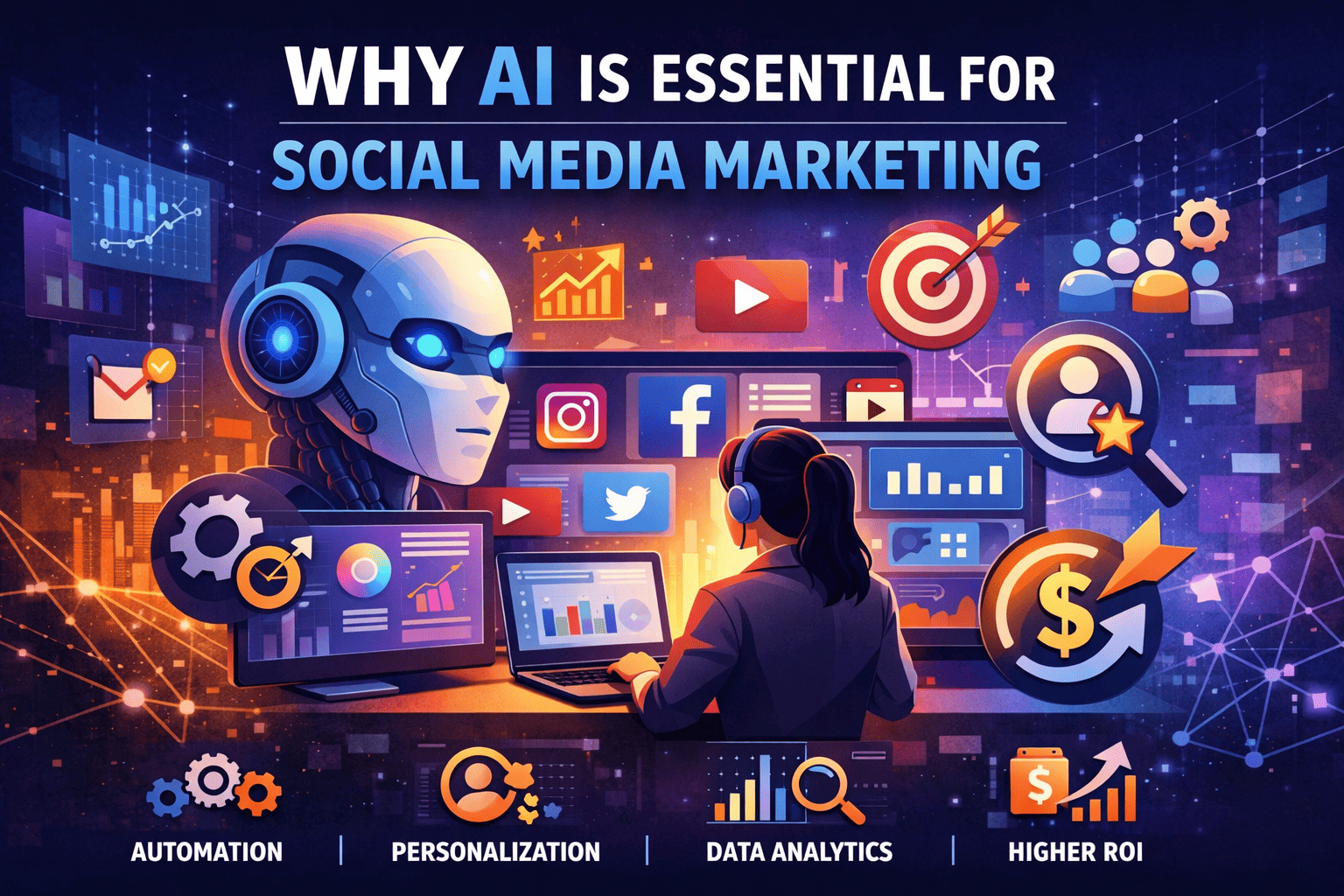
Social media marketing has evolved from simple posting and engagement into a complex, data-driven, and performance-focused business function. Today, brands compete not only on creativity but also on speed, personalization, and intelligent decision-making. This shift is the main reason why 97% of marketing leaders now believe AI skills are essential for anyone working in social media and digital marketing roles. Artificial Intelligence is no longer a future trend; it is already a core part of modern marketing success.
1. Social Media Has Become Too Fast and Complex to Handle Manually
Managing Multiple Platforms and Formats
Modern brands are present on many platforms such as Instagram, Facebook, LinkedIn, YouTube, and X, and each platform demands different types of content like reels, shorts, stories, carousels, and long videos. Handling all these channels manually requires huge time and effort. AI helps streamline this process by organizing content workflows, scheduling posts efficiently, and managing multiple platforms from a single system, making marketing teams more productive and consistent.
Keeping Up with Trends and Algorithm Changes
Social media trends change almost every week, and platform algorithms are constantly updated. What works today might not work tomorrow. AI tools can analyze platform behavior, detect content trends, and suggest strategic changes faster than any human team could. This allows brands to stay relevant and competitive instead of reacting too late to market changes.
2. AI Is Transforming How Content Is Created and Planned
Faster Content Creation Without Losing Quality
Creating high-quality content regularly is one of the biggest challenges for marketing teams. AI helps generate content ideas, improve writing quality, and assist in creating visuals and videos. This does not replace human creativity but speeds up the production process, helping teams maintain consistency while still focusing on creative direction and brand voice.
Data-Driven Content Planning
Instead of guessing what kind of content will perform well, AI analyzes past performance, audience behavior, and engagement patterns. Based on this data, it suggests what type of content to publish, when to publish it, and on which platform. This makes content strategies more predictable, reliable, and performance-oriented.
3. Deeper Audience Understanding and Personalization
Understanding Customer Behavior at a Deeper Level
Today’s customers expect brands to understand their needs and preferences. AI studies user behavior such as clicks, views, engagement, and purchase history to build detailed audience profiles. This helps brands understand what their audience truly wants, not just what they assume.
Delivering Personalized Experiences at Scale
Personalization is no longer limited to big brands. With AI, businesses can show different content, ads, and messages to different audience segments automatically. This creates more relevant experiences for users, improves engagement, and increases the chances of conversion without requiring massive manual effort.
4. Smarter and More Accurate Marketing Decisions
Turning Large Data into Clear Insights
Social media produces a huge amount of data every day, but raw data alone is not useful. AI transforms this data into clear, actionable insights by showing what is working, what is not, and why. This helps marketers take confident decisions based on facts rather than assumptions.
Predicting Performance and Reducing Risk
AI can analyze patterns from past campaigns and predict which strategies are likely to perform better in the future. This reduces the risk of wasting budget and time on ineffective campaigns and helps businesses invest their resources more wisely.
5. Better Advertising Performance and Higher ROI
Automatic Optimization of Ad Campaigns
AI continuously monitors ad performance and makes adjustments to targeting, budget allocation, and creative variations. This means campaigns improve over time without constant manual intervention, leading to better results at lower costs.
Smarter Budget Utilization
Instead of spending money equally across all campaigns, AI shifts budget toward better-performing ads and audiences. This improves return on investment and makes paid marketing more efficient and scalable.
6. Faster Customer Communication and Better Brand Experience
24/7 Customer Support Through AI Chatbots
Modern customers expect instant replies. AI-powered chatbots help brands respond to common questions, handle basic support, and guide users even outside business hours. This improves customer satisfaction and builds trust in the brand.
Consistent and Professional Communication
AI ensures that responses remain consistent in tone and quality, especially when handling large volumes of messages. This helps maintain a strong and reliable brand image across all social platforms.
7. Why AI Skills Are Now Essential for Social Media Professionals
Changing Expectations from Marketing Roles
Marketing leaders now look for professionals who can not only create content but also understand data, automation, and performance optimization. AI skills make marketers more valuable, more efficient, and more future-ready.
Staying Competitive in the Job Market
As more companies adopt AI-powered marketing, professionals who understand these tools naturally have better career opportunities. This is why AI skills are quickly becoming a basic requirement, not a special advantage.
Conclusion
AI is no longer an optional technology in social media marketing. It is now a core part of how brands grow, compete, and succeed online. From content creation and personalization to advertising and customer communication, AI is improving every stage of the marketing process. That is why 97% of marketing leaders agree that AI skills are essential for social roles. The marketers who learn and adopt AI today will be the ones leading the digital industry tomorrow.