


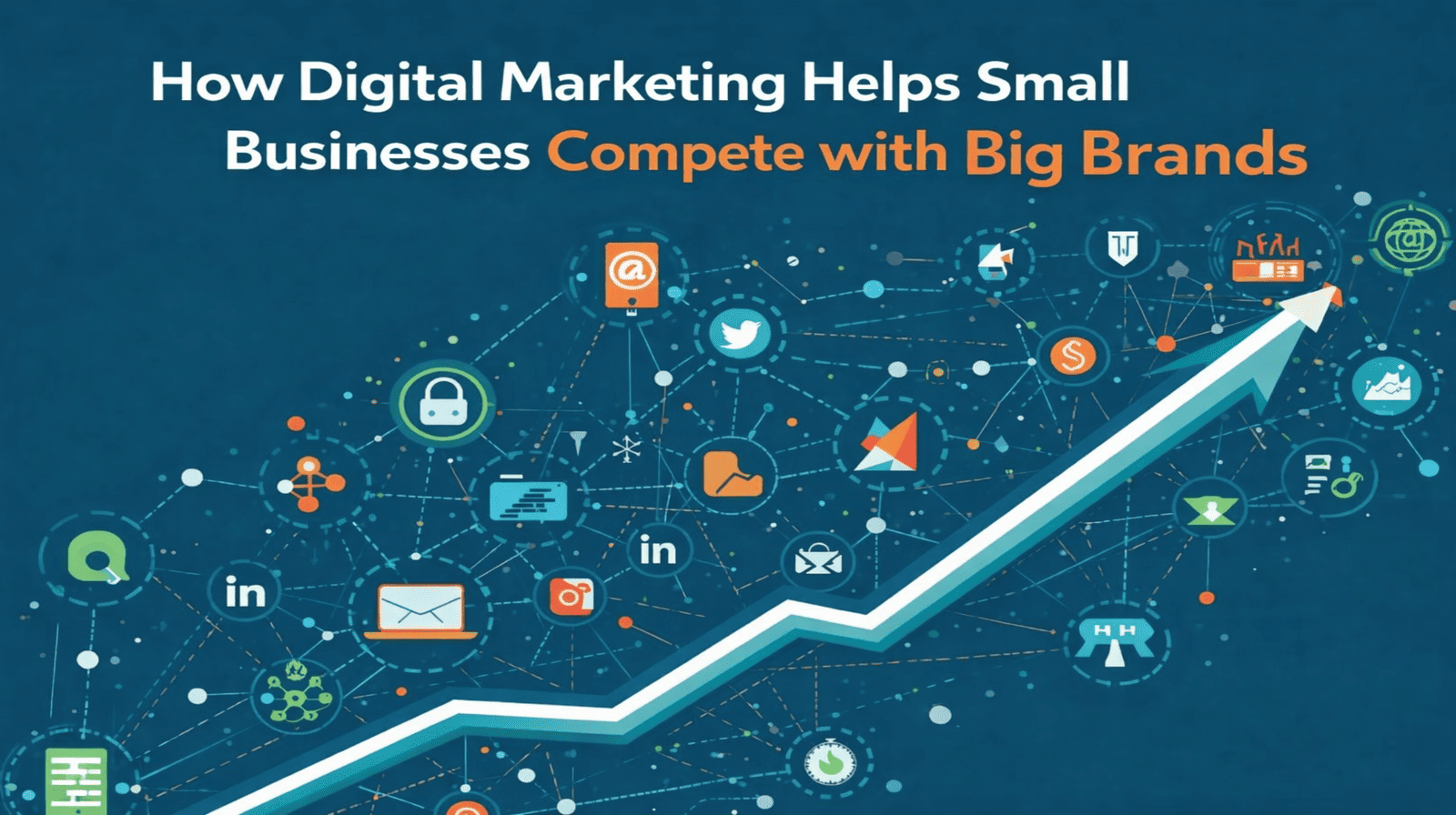
For many small business owners, competing with big brands can feel like David taking on Goliath. Large corporations have massive budgets, huge marketing teams, and years of brand recognition. On the other hand, small businesses often have limited resources, fewer staff, and the constant challenge of getting noticed. But thanks to digital marketing, the gap between small and large companies is no longer as wide as it once was.
Digital marketing gives small businesses tools that were once only available to big players. With smart strategies and creativity, even a tiny local shop can reach customers across the city—or even the world. Let’s look at how digital marketing empowers small businesses to compete on a bigger stage.
Reaching the Right People, Without Wasting Money
Traditional marketing can be expensive. TV ads, billboards, and print campaigns often require big budgets and hope for the best results. Digital marketing, however, allows businesses to target exactly who they want to reach.
Take social media ads, for example. A local boutique can show ads only to people within a 10-mile radius who are interested in fashion. Similarly, Google Ads lets businesses display their website to people searching for specific products or services. Every click, every impression can be tracked. That means small businesses can make every marketing dollar count and adjust their campaigns instantly based on what’s working.
Building Trust and Recognition
Big brands have a head start when it comes to recognition, but small businesses can still make a strong impression. Content marketing is one way to build authority and trust. Writing helpful blog posts, creating how-to videos, or sharing tips on social media positions a small business as an expert in its field.
People tend to trust businesses that educate them or solve a problem. For instance, a small home repair company can post DIY tips and maintenance guides. Over time, this not only attracts new customers but also builds credibility—something that big brands can’t always achieve on a personal level.
Social media also plays a huge role here. Responding quickly to comments, sharing behind-the-scenes stories, and showing the human side of a business makes customers feel connected. This kind of authenticity often gives small businesses an advantage over larger, more impersonal companies.
Affordable Marketing That Scales
One of the most appealing aspects of digital marketing is how budget-friendly it can be. While big companies spend millions on ad campaigns, small businesses can start with very little and gradually grow their investment.
Email marketing is a great example. With just a few dollars, a small business can send personalized messages to hundreds or even thousands of subscribers. Social media ads allow businesses to experiment with small budgets, measure results, and scale up when something works.
Even search engine optimization (SEO) is within reach. Optimizing a website so it ranks higher in Google search results can bring in free, organic traffic over time. While it may take patience and effort, the long-term payoff can be substantial—and it allows small businesses to compete with companies that have far larger marketing teams.
Targeting Niche Audiences
Big brands often market to mass audiences, which can make their messaging feel generic. Small businesses, on the other hand, can focus on specific groups of people who are most likely to buy from them.
Analytics tools on social media and websites help business owners understand who is visiting their pages, what they like, and how they interact with content. Armed with this data, small businesses can create highly relevant campaigns that resonate with their audience.
For example, a local bakery might target ads to people in the area looking for birthday cakes or wedding desserts. This level of precision ensures marketing efforts aren’t wasted and often results in higher conversion rates than broad campaigns from larger brands.
Delivering a Personalized Experience
Digital marketing isn’t just about attracting new customers—it’s about keeping them happy. Small businesses can use online channels to interact directly with customers, provide instant support, and create a personal experience.
Chatbots, live messaging, and social media interactions allow businesses to respond quickly to inquiries. Sharing customer success stories or highlighting community involvement can also strengthen relationships. When customers feel valued, they are more likely to stay loyal. In many cases, a small business’s personal touch can outshine the polished but distant approach of big brands.
Learning and Adapting Quickly
Another advantage small businesses have with digital marketing is the ability to track everything. Every campaign, every post, and every ad can be measured. Analytics show what’s working and what isn’t, making it easier to adapt strategies in real-time.
This flexibility allows small businesses to experiment without massive risk. If one tactic doesn’t perform well, it can be tweaked or replaced immediately. In contrast, big brands often rely on lengthy approval processes, making it harder for them to pivot quickly.
Conclusion
Digital marketing has given small businesses a fighting chance to compete with larger, more established brands. By reaching the right audience, building trust, offering personalized experiences, and measuring results, small businesses can stand out in crowded markets.
The key is strategy, creativity, and persistence. While big brands have the advantage of scale, small businesses can compete by being nimble, authentic, and deeply connected to their customers. With digital marketing, even the smallest business can make a big impact.