


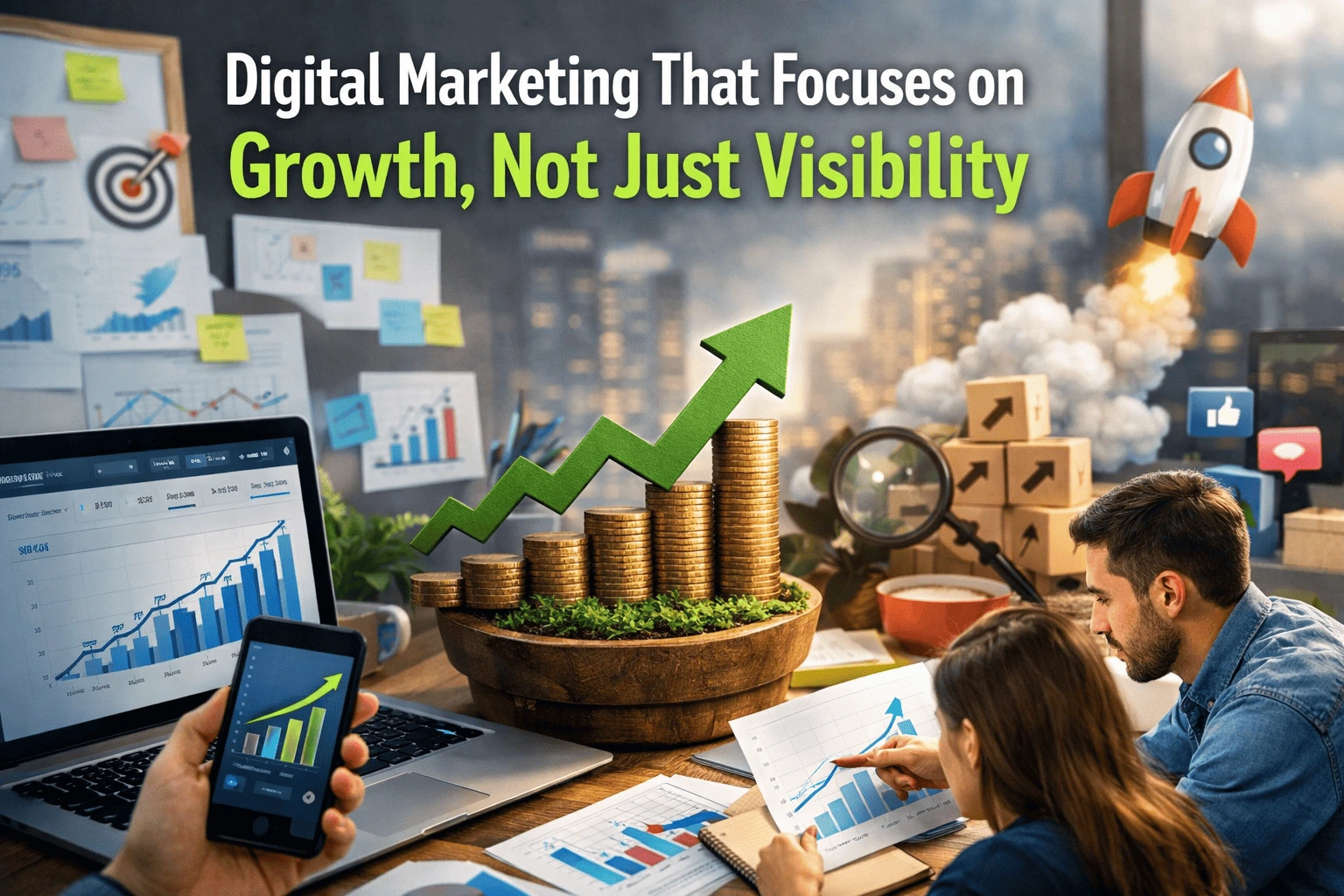
For years, digital marketing has been measured by surface-level numbers—likes, impressions, reach, and follower counts. While visibility is important, it’s no longer enough. Businesses today don’t just want to be seen; they want results. They want leads, sales, customer retention, and long-term growth.
That’s where growth-focused digital marketing comes in.
Real digital marketing isn’t about being everywhere. It’s about being effective where it matters most.
Visibility Is the Starting Point, Not the Goal
Visibility helps people discover your brand, but discovery alone doesn’t grow a business. A website with high traffic but no conversions is just noise. A social media page with thousands of followers but no inquiries adds little real value.
Growth-driven marketing shifts the focus from how many people see you to how many people choose you.
The goal is simple: attract the right audience, guide them clearly, and convert attention into action.
Strategy Comes Before Platforms
One of the biggest mistakes businesses make is jumping straight into platforms—running ads, posting on social media, or doing SEO—without a clear strategy.
Growth-focused digital marketing starts with understanding:
Who your ideal customer really is
What problem they’re trying to solve
Where they make buying decisions
What builds trust for them
Only then do platforms and tools come into play. Every campaign, keyword, and creative asset should serve a clear business objective—not just online presence.
Visibility Marketing vs Growth-Focused Marketing
Here’s a simple comparison to show the difference between traditional visibility-based marketing and a growth-driven approach:
| Aspect | Visibility-Focused Marketing | Growth-Focused Marketing |
|---|---|---|
| Primary Goal | Brand exposure | Leads, sales, and revenue |
| Success Metrics | Likes, reach, impressions | Conversions, ROI, customer lifetime value |
| Audience Targeting | Broad and generic | Highly specific and intent-driven |
| Content Purpose | To be seen | To educate, persuade, and convert |
| Long-Term Impact | Short-term attention | Sustainable business growth |
This shift in mindset is what separates brands that look popular from brands that actually grow.
Traffic That Converts Beats Traffic That Looks Good
More traffic doesn’t automatically mean more growth. Relevant traffic does.
Growth-oriented marketing focuses on:
Search intent, not just search volume
Conversion paths that are simple and clear
This includes optimized landing pages, strong calls-to-action, fast-loading websites, and messaging that speaks directly to customer pain points.
Data Drives Smarter Decisions
Growth-focused digital marketing relies heavily on data—not assumptions.
Instead of guessing what works, businesses track:
Which channels bring qualified leads
Where users drop off in the funnel
What content influences decisions
Which campaigns generate real revenue
This allows continuous optimization, better budgeting, and stronger performance over time.
Long-Term Relationships Matter More Than One-Time Clicks
Growth isn’t just about acquiring new customers; it’s about keeping them.
Email marketing, remarketing, personalized content, and post-purchase engagement all play a role in building long-term customer relationships. When customers trust your brand, they return—and they refer others.
Final Thoughts
Digital marketing that focuses only on visibility may create attention, but attention alone doesn’t pay the bills.
True growth-focused digital marketing aligns strategy, content, technology, and data to drive measurable business outcomes. It’s about attracting the right people, converting them effectively, and building relationships that last.
Because in today’s digital world, being visible is easy—but growing is what truly matters.