



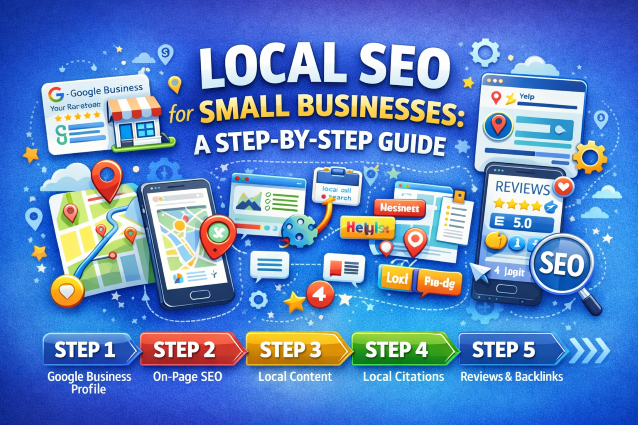
For small businesses to do well today, having a strong online presence is a must. Local SEO is a simple way to get more local clients. If you use the correct local marketing, more people will see you in local searches.
Think about searches such as “restaurants near me” or “digital marketing company in Rajkot.” It shows location-based SEO can be a game changer for small firms.
Here’s a simple guide on how to use local SEO to its full potential so your small business can grow.
What is Local SEO?
Local SEO (Search Engine Optimization) is the process of optimizing your online presence so your business appears in location-based search results.
For example, when someone searches:
- “Best coffee shop near me”
- “Digital marketing agency in Gurugram”
- “Restaurant in Morbi”
Google shows local businesses near the user.
These results usually appear in the Google Local Pack, which includes:
- Business name
- Reviews
- Location on Google Maps
- Phone number
- Business hours
Ranking in these results can bring high-intent customers ready to buy.
Why Local SEO is Important for Small Businesses
Local SEO is one of the most cost-effective marketing strategies for small businesses.
Key Benefits
1. Higher Visibility in Local Searches
Your business appears when nearby customers search for your services.
2. More Website Traffic
Local searches drive targeted visitors who are more likely to convert.
3. Increased Foot Traffic
Many customers search online before visiting a physical store.
4. Builds Trust and Credibility
Positive reviews and strong local listings increase brand trust.
5. Higher Conversion Rates
Local search users usually have strong purchase intent.
How Local SEO Works
- Google Business Profile: Getting your Google Business Profile right is really important. It helps your business show up in local search results and on Google Maps.
- On-Page SEO: When working on your website’s SEO, use location-based words in your content, titles, and descriptions. This improves your website’s chances of ranking in local searches.
- Local Listings: It’s a good idea to list your business in online directories like Yelp, Yellow Pages, and other local business listings.
- Reviews and Ratings: Keep an eye on your customer reviews and reply to them. This helps build trust. Businesses with good reviews tend to rank higher in search results.
- Local Backlinks: Links to your site can really help improve your rank. Work on earning links from local blogs, news outlets, and business listings to get more visibility in your area.
Why Local SEO Matters for Small Businesses
Let’s see how it can help your small business:
1. Better online visibility: Local SEO helps your business show up higher in local search results. This gets you more customers who are looking for what you offer in their area. It brings in both online and in-person traffic.
2. More store visits: If you run a brick-and-mortar store, local SEO can really help. When set up well, it brings more people through your door since they can easily find you via local online searches.
3. Better customer interaction: Google’s business profile lets you talk to your customers. You can answer reviews and share content that matters to local folks. This builds trust and keeps customers coming back.
4. More sales: People doing local searches are usually ready to buy. If they’re looking for something near them, they’re likely to become customers. So, ranking high in those searches can really boost your sales.
5. Edge Over Big Companies: It’s hard for smaller businesses to fight against large companies everywhere. Local SEO lets you focus on your area and outperform them in local search results.
6. Budget-friendly marketing: Local SEO is also less pricey compared to newspaper ads or TV commercials. It can also help you connect with people without needing a huge marketing budget.
Step-by-Step Local SEO Strategy for Small Businesses
Step 1: Create and Optimize Your Google Business Profile
Your Google Business Profile (formerly Google My Business) is the foundation of Local SEO.
How to Optimize It
- Add your business name
- Include accurate address
- Add phone number
- Choose the correct business category
- Upload high-quality photos
- Add business hours
- Write a keyword-rich business description
Businesses with optimized profiles get more clicks, calls, and direction requests.
Step 2: Use Local Keywords
Local keywords help search engines understand where your business operates.
Examples
Instead of targeting:
- “best restaurant”
Use:
- “best restaurant in Morbi”
- “family restaurant in Morbi Gujarat”
Where to Use Local Keywords
- Website homepage
- Blog posts
- Meta titles and descriptions
- Google Business Profile description
- Service pages
Step 3: Optimize Your Website for Local SEO
Your website must clearly communicate your location and services.
Important Elements
1. Location Pages—Create pages targeting specific locations.
Example:
“Digital Marketing Services in Rajkot”
2. NAP Consistency—Your Name, Address, Phone Number should be consistent all over platforms.
3. Mobile-Friendly Design—Most local searches are on mobile devices.
4. Fast Website Speed—Google prioritizes fast-loading websites.
Step 4: Get More Customer Reviews
Reviews play a huge role in local search rankings and customer trust.
Reviews are matter for Improve Google rankings, increasing credibility, and influencing buying decisions
How to Get More Reviews
- Ask satisfied customers directly
- Send review links via email or WhatsApp
- Add a review request on your website
Tip—Always respond to reviews, both positive and negative.
Step 5: List Your Business in Online Directories
Online directories help Google verify your business information. Popular local directories like Google Business Profile, Yelp, Bing Places, Justdial, and IndiaMart.
Make sure your NAP is identical everywhere.
Step 6: Use Social Media for Local Visibility
Local engagement and website traffic can be driven with social media. Include your business location on profiles, engage with the local community through posts and comments, showcase customer experiences or UGC, and advertise localized offers or events.
Step 7: Build Local Backlinks
Building backlinks on credible local websites helps to build up your business authority. There are a number of ways to build local backlinks together with other businesses near where you are located sponsoring community events and working with local organizations or writing guest posts for local blogs or news sites.
Step 8: Optimize for Voice Search
Voice search is rapidly growing with devices like Google Assistant and Alexa. Voice search, like Use conversational keywords, adding FAQ sections, and focusing on long-tail keywords
By using these Local SEO tips, small businesses can be seen more online, get more local customers, and grow their business.
Local SEO Tools for Small Businesses
Here are some useful tools for managing Local SEO:
1. Google Business Profile
Manage your local listing and customer reviews.
2. Google Search Console
Monitor search performance.
3. Google Analytics
Track website traffic and user behavior.
4. SEMrush / Ahrefs
Research local keywords and competitors.
Fuerte Developers provides hands-on SEO plans made just for small businesses.
Here’s why we’re a solid pick:
- Local SEO That Fits: Plans built to match your aims.
- Budget-Friendly: Marketing that won’t hurt your wallet.
- Clear Updates: You’ll always know how things are going.
- Google Know-How: We keep up with how Google works.
- Lasting Results: Building your brand for the future.
Conclusion
Local SEO is a must for small businesses that want to pull in local shoppers and get ahead. With the right plan, you can beat even big names in local search.
Working with Fuerte Developers means getting Local SEO help that grows your reach, builds your name, and keeps your business growing.
If you’re looking to get more local clicks and upsells, then getting Local SEO help could be key.