


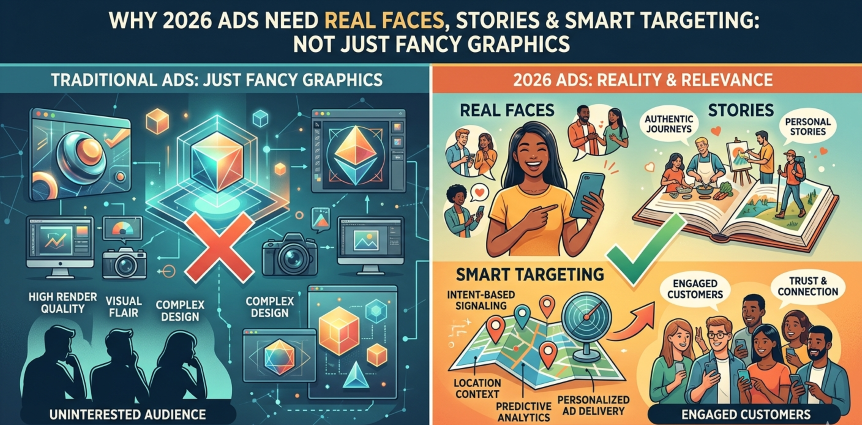
The advertising world in 2026 has evolved beyond the early “AI panic” years. Artificial intelligence is behind a lot of marketing tools these days, but the brands that really stand out have grasped something important: trust and genuine human connection matter more than ever. With AI-generated content becoming the norm, people are getting wary. Ads often come across as too polished or robotic, which leads to what marketers call a “trust deficit.” So, brands leaning solely on flashy visuals or flawless graphics frequently find it tough to grab attention.
Today, the ads that truly succeed combine real human faces, authentic stories, and smart AI-powered targeting. This combination helps brands break through digital noise and build meaningful connections with their audience.
Real Faces Build Trust Faster
One of the biggest shifts in advertising lately is how much more effective ads have become when they focus on real people. Ads with actual faces tend to do better than those relying only on graphics. When audiences see a human face, they naturally pay more attention and feel a stronger connection with the message.
Real faces in ads can include:
- Customers sharing testimonials
- Founders explaining their mission
- Team members demonstrating products
- Behind the scenes content from the brand
This connection makes the brand feel more transparent and trustworthy, which is critical for both B2C and B2B advertising.
Storytelling Creates Memorable Ads
People remember stories faster than they remember any design elements. Something visually impressive catches someone’s eye for a few seconds, but once they’ve seen it, a compelling story stays in their mind long after.
Story driven advertising in 2026 often focuses on the following:
- The problem a customer faced
- The journey to finding a solution
- The results achieved after using a product or service
By framing advertising around real experiences, brands transform ads from simple promotions into engaging narratives that audiences want to watch or read.
Smart Targeting Makes Ads More Relevant
Even the best creative content will fail if it reaches the wrong audience. That’s why smart targeting has become a core component of modern advertising strategies.
Advertising platforms now provide advanced targeting tools, allowing businesses to reach people based on various factors, such as the following:
- Interests and online behavior
- Job roles and industries
- Purchase intent
- Geographic location
- Past interactions with the brand
When brands mix genuine storytelling with ads that reach the right people, they’re able to connect with audiences who actually care about what they’re saying. This blend usually makes campaigns more effective and can improve the return on investment.
User-Generated Content Is Becoming More Powerful
Lately, there’s been a clear shift toward user-generated content in advertising. Instead of just depending on their own teams to create ads, many brands are turning to customers to share their real experiences with products or services. Because these ads come from actual users rather than marketing experts, they feel more sincere. That authenticity tends to make them more believable and relatable for potential buyers.
UGC can include:
- Customer reviews
- Social media posts
- Video testimonials
- Product demonstrations from real users
Many brands now integrate UGC directly into their advertising campaigns.
The 2026 Advertising Formula
Successful advertising campaigns today follow a powerful formula that balances human creativity with AI intelligence.
| Element | Why It Matters in 2026 |
| Real Faces | Build trust and overcome skepticism toward AI-generated content |
| Real Stories | Create emotional connections and increase engagement |
| Smart Targeting | Uses AI behavior signals to reach the right audience |
Together, these elements create ads that feel authentic, relevant, and trustworthy.
Comparison: 2024 vs. 2026
| Feature | 2024 Advertising | 2026 Advertising |
| Visual Style | Polished, “Perfect” Graphics | Raw, Authentic, “Human” Visuals |
| Messenger | Paid Influencers / Logos | Founders, Employees, & Real Users |
| Strategy | Mass Reach (Broad Demographics) | Micro-Sized (Smart Intent Targeting) |
| Consumer Goal | Attention / Likes | Trust / Community Connection |
Fancy Graphics Still Matter: But They’re Not Enough
Good design remains important. Clean visuals, strong branding, and engaging layouts still help ads stand out. However, design should support the message rather than replace it.
The most effective ads combine the following:
- Authentic human stories
- Real people and relatable moments
- Smart audience targeting
- Clear and compelling design
When these elements work together, advertising becomes more engaging, credible, and effective.
Conclusion
Advertising in 2026 is no longer about producing the flashiest graphics or the most perfectly polished campaigns. The brands that succeed are those that combine technology with humanity.
Now AI plays a critical role in analyzing data and optimizing campaigns, but the heart of effective advertising still lies in human storytelling, authenticity, and emotional connection.
Companies that find the right balance leveraging AI to gain insights but keeping genuine people and narratives front and center are the ones likely to make an impact in an increasingly crowded digital landscape.