


As a brand, your story is your connection with your customer on a deeper level. It extends beyond the mere sale of a product to encompass sharing the motivation behind your brand, your values, and how your story came about.
Essentially, the purpose of brand storytelling is to connect customers with brands emotionally through meaningful narratives. The telling of a story instead of only stating facts, features, or statistics can create trust, elicit attention, and become associated with the brand and therefore memorable. Customers will remember the emotional impact a brand had on them before they remember what they were told.
With increasing advertising exposure and competition in the digital realm today, this becomes all the more important when attempting to gain customer loyalty. Consumers are experiencing a constant barrage of advertisements and product options, which makes it increasingly difficult for businesses to establish brand identity and be noticed. This is why brand storytelling has become a powerful sales tool, as products alone do not generate sales as they once did; rather, the experience and/or emotion that occurs as a result of the interaction with the brand eventually leads to a sale.
If you think about your favorite brands, you probably do not only remember their product offerings but will also likely remember the feeling they created for you, the value/mission behind their message, or the story they shared with you. It is this emotional connection that gets repeat purchasers to continue buying from the same brand.
What is Brand Storytelling?
The connection between a company and its customers through shared values and traits is created through the story of the company as linked to the story of the customers. The overall story creates the link between the two stories through interweaving the story of the company, its history, its purpose, the values of the company, and the culture of the company and their respective journeys through life with the customers’ journey to the company.
Consider some of the questions that might be asked about the customer journey to establish a link:
- Who is the customer?
- What is the problem the customer is experiencing?
- How does the customer use your product or service to resolve the issue?
The culmination of the facts, feelings, and interpretations that form your brand’s narrative will create your brand story. In actual fact, however, as with all business and branding, the leading factor of your brand story will be bought from the business and brand authenticity. Your brand story should be an actual representation of your business and brand so that you can connect emotionally with your customers and create brand loyalty to your brand.
Why Brand Storytelling Matters in 2026
Science supports storytelling, and there are many scientific reasons why brand stories are important for success as an overall brand and organization.
1. NARRATIVES ARE ALSO MEANINGFUL TO THE BRAIN
Narratives are far more complex than simple statistics or facts for the human brain. This is pertinent to building an emotional connection with your customers; if you don’t establish a narrative for your brand and only attempt to sell with facts (such as technical product specifications), there’s no reason to differentiate your brand from your competitors’ brands.
2.PROVIDING THE MOST SUPPORT TO YOUR BRAND
Marketing to the right type of customers the “right customers” are those who feel aligned with your brand identity happens when you market your brand story properly. If you connect with your narrative and build an identity around it, you will gain loyal customers.
3. Attracting the Right Consumers
Positioning your brand story properly will help you attract the right type of consumers for your defined target audience. If your brand story has been defined for the consumers that you want to attract, it is more likely that you will attract the right consumers.
When I refer to “right consumers,” I refer to those who find themselves represented by your brand identity; consumers, feeling a connection to your story or organization, can become very loyal.
4. Brand Differentiation
Your brand story helps to differentiate your business from other competitors by showcasing your unique or memorable qualities. Taking these memorable and unique traits and developing them through story-telling makes it easier for others to tell a story about your brand.
5. Making Your Brand Memorable
A compelling brand story can help attract consumers’ attention in ways that no other form of marketing or brand strategy can. In this way, consumers will have your brand in the back of their minds if they have to make a choice about where to purchase something/endorse a person within your business space.
6. Humanizing Your Brand
A strong brand story or well-designed brand personality can make a business/brand feel like a human being. When consumers connect with humanized brands, they interact as if they are dealing with a real person on the other side of the interaction.
7. Fostering Loyalty and Trust in Your Brand
The steps above ultimately combine into this ultimate outcome. The consumer will ultimately feel loyal to your brand after they’ve initially become a customer from hearing your story. The authentic brand story is what creates trust in your brand and therefore influences consumers’ choices to go with a brand they trust to provide support.
Elements Of A Brand Story
The main elements that will help shape your brand story are:
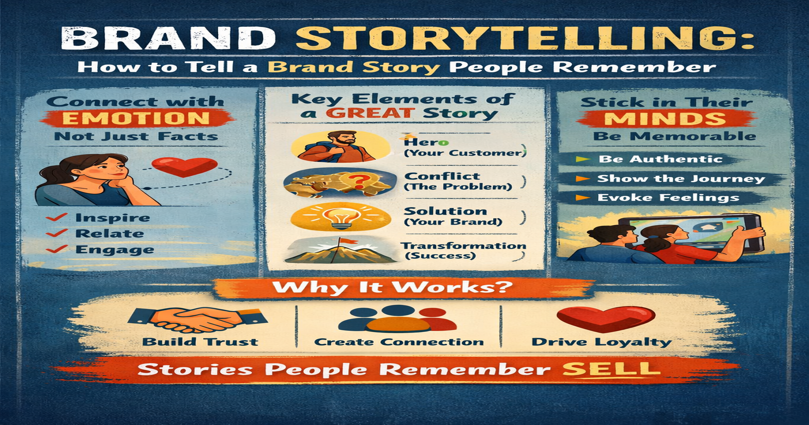
- Character(s): The Founders or your organization
- Setting: Your Beginning
- Conflict: Your Conflict/Problem
- Rising Action: The actions that led up to your goal being resolved with the resolution to your problem
- Climax: The Resolution to Your Problem
- Transformation: The entire evolution of who your brand is through the journey of creating and where you intend to go in the future
How to Create Your Brand Story
1. Define Your Origin Story
How did your brand come about?
- Did you face a challenge?
- Did you see a gap in the market?
- Was it something you were passionate about?
Be honest about your story and don’t worry about making it perfect.
2. Understand Your Audience Deeply
Create a profile of your target market:
- How old are they? What are their interests? What are their lifestyles?
- What problems and issues do they face?
- What do they long for?
The more you understand your customers, the better your brand story will be.
3. Determine Your Core Message
Your story should answer these three questions:
- Who are you?
- What do you believe in?
- Why should people care?
4. Follow a Simple Structure for Your Story
To create a great brand story, use the following structure:
- Beginning—introduce the problem or inspiration behind your brand
- Middle—explain the struggle and journey to become your brand
- End—show the solution and how it transformed you
5. Be Consistent in Every Area
Your brand story needs to be represented consistently across:
- Website
- Social media
- Ads
- Packaging
- Customer service
Consistency in your branding creates customer trust.
Examples of Strong Brand Storytelling
Example 1: Digital Marketing Agency
Instead of: “We provide digital marketing services.”
Say:
“The team at Fuerte Developers is passionate about helping businesses shine brightly and break through the clutter of the marketplace. We do this through the development of digital marketing strategies that not only give businesses visibility but also provide opportunities for people to engage with those businesses and convert leads into paying customers.”
Example 2: Social Media Marketing
Instead of: “We manage social media accounts.”
Say:
“We have seen too many great brands overlooked simply because their story was not communicated well. By helping businesses to turn their social media into a powerful platform where consumers can engage with their brand and develop a long-term relationship based on trust and loyalty, we are able to help those companies grow at an exponential rate.”
How to Use Brand Storytelling in Marketing
1. Social Media
- Share founder stories
- Customer journeys
- Behind-the-scenes content
2. Website
- “About Us” page with a real story
- Product pages with emotional context
3. Ads
- Story-based hooks perform better than direct selling
- Tell stories, not just promotions
Conclusion
Brand storytelling is more than just a marketing tool; it is the foundation of your brand. When executed properly, brand storytelling will help you: Build trust with your audience, build emotional connections with your audience, and drive your business growth over time through increased awareness of your brand and a greater level of engagement with your audience.
Remember: People may forget what you said, but they will always remember how your brand story made them feel.