


For marketers, Meta has changed dramatically over the last few years, and by 2026, the platform will appear far removed from what they’re used to. Rapid advances in AI technology, new privacy laws, and changing consumer habits mean businesses must adapt their old-fashioned methods of getting results on Meta. Although much of what is done with Meta Ads is different, some of the same key concepts that make ads effective are still the same. The trick is knowing how to adjust to all of the changes while maintaining the basics that will drive an advertiser’s results.
The Meta Ads Ecosystem in 2026
In 2026, predictive systems will dictate Meta advertising delivery, rather than reliance on human control. Advertisers will focus on defining business goals to guide their advertising campaigns while using an automated algorithmic system for ad delivery and placement.
This change will require advertisers to pay attention to the following:
- A defined goal from the beginning of an advertising campaign to generate leads/sales, etc.
- High-quality and creative ad messaging.
- Using the same consistent data signals for reporting across all platforms where ads run.
For brands that currently focus on social media marketing in Coimbatore, this methodology will lessen the amount of time spent manually managing social media advertising efforts and reward strategic plan creation.
Major Shifts in Meta Advertising
Meta Ads in 2026 are shaped by overall developments that are going to change how ads will show up for people on Meta platforms. These include:
- AI-driven demographic targeting instead of selecting explicit interests
- Privacy-first reporting that uses aggregated performance metrics to report on ad delivery
- The majority of a user’s path will be through Meta’s platforms
Due to these developments, it has become even more important to base your advertising strategy on long-term results than on short-term clicks.
What Still Works Today
Many elements in the Meta form for digital marketing remain the same despite the changes in technology and its impact on marketing. What has changed is not the way things worked, but the way we implement them. The pace of technology can be overwhelming, which has elevated the competitive landscape.
1. Value Communication
The ability to convey value to users within your ad will greatly influence how effective your ads are. Users are scrolling through their feed at such a rapid pace that you have a very short time to engage them. If your message gets lost or delayed, you will not be successful. Creating ads that clearly convey value will increase your success by providing users with answers to critical questions:
- What is the product or service?
- Why would users care?
- What action(s) should users take?
2. Brand Consistency
An additional factor still remains extremely relevant in the current advertising environment: consistent brand identity. Brands that look and feel familiar tend to produce higher levels of success than brands that do not. Trust is built through consistency over time, and the more times users see your ads, the more likely they will recognize your brand. To create brand consistency in your ads, you need to think about:
- A consistent color palette and visual style will improve your ad’s success.
- A consistent voice/tone will improve your ad’s success.
- Repetition of key messaging throughout your campaigns will improve your ad’s success.
3. Creative testing and optimization
Testing and optimizing your creatives is also a crucial ingredient for growing your Meta Ads business since it is one of the biggest contributors to Meta Ads’ ability to continue to grow. Advertisers will no longer have a single “winning ad”; the key to success is ongoing testing and creative development to drive continued growth. The advertisers that successfully scale will take the following actions:
- Regularly test several creative concepts simultaneously;
- Experiment with different creative messaging, formats, and hooks;
- Monitor results to optimize rapidly based on performance.
In essence, advertisers that consistently test new creatives will continue to see growth.
Creativity as Influencer of Results
As we look down the road to 2026, creative content will be the driving force behind how successful Meta Ads are. User-generated content has established itself as one of the most effective types of creative because it feels genuine and relatable and creates trust between the audience and the advertisers.
Presenting raw, authentic, and relatable content (like regular users post on social media) has been more successful than polished advertisements produced in a studio environment. The need for strong hooks has progressed too. The first several seconds of a video will determine whether a viewer continues to view the video or scrolls past.
Problem/solution storytelling has become popular with advertisers. They highlight a problem, provide a solution, and show the user how successful the solution is in a simple and fast-paced way. Creative executions that contain elements of fast-paced editing, subtitles, and visuals that are attention-grabbing and visually dynamic are used frequently, given the competitive content landscape.
Strategy Comparison Tables
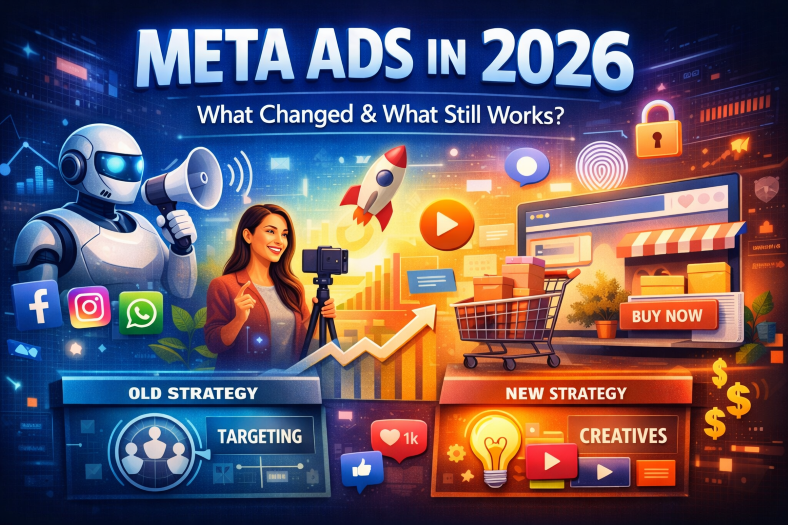
Old vs New Meta Ads Strategy
| Aspect | Old Strategy | 2026 Strategy |
| Targeting | Detailed audience targeting | Broad targeting + AI |
| Campaign Type | Manual campaigns | Advantage+ campaigns |
| Creative | Secondary focus | Primary focus |
| Data Tracking | Pixel-heavy | First-party + CAPI |
| Optimization | Manual tweaks | AI-driven optimization |
What Works vs What Doesn’t
| Works in 2026 | Doesn’t Work Anymore |
| UGC-style ads | Overly polished ads |
| Broad audiences | Narrow targeting |
| Video creatives | Static-only strategy |
| Strong hooks | Slow intros |
| Continuous testing | Set-and-forget campaigns |
Creative Performance Comparison
| Creative Type | Performance Trend |
| UGC videos | High |
| Reels-style content | High |
| Static images | Moderate |
| Carousel ads | Moderate |
| Studio ads | Declining |
Conclusion
2026 continues to develop Meta advertising with advancements in technology, automation, and overall competition. Success comes from balancing creative ideas with technological components. The majority of the technical aspects of advertisement include the use of artificial intelligence and automation; however, the human aspect will still play an important role in how an advertisement is positioned. Advertisers who create quality, authentic, and engaging content along with developing meaningful offers and engaging in consistent testing will continue to show better results than other advertisers. In conclusion, the future of Meta’s advertising is not only about utilizing advanced technologies but also about utilizing those technologies well to make a strong connection with their targeted audiences.