


Over the past ten years, social media marketing has changed greatly. From famous people endorsing products to micro-influencers to communities led by creators, brands have adapted their methods of connecting with audiences over time. One of the most interesting trends in digital advertising is the creation of AI Influencers that will be used in digital marketing by the year 2026.
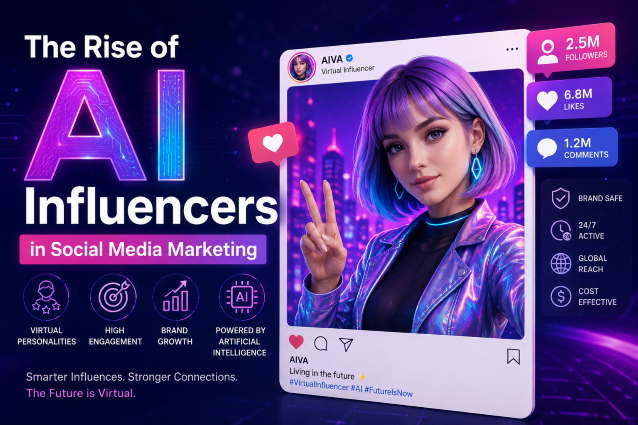
AI Influencers are virtual characters developed with the aid of computer graphics and artificial intelligence and will be used to represent brands via social media and other platforms. Although these characters do not have a physical presence in the real world, they have hundreds of thousands to millions of followers, work with top-tier brands, and create enormous amounts of engagement through social media and other platforms.
Due to the lack of physical space for businesses to create visible and searchable content, AI Influencers have emerged as an effective method by which businesses can capture the attention of their target audiences. So, just what are AI Influencers and why are companies choosing to invest more and more money into them?
What Are AI Influencers?
AI influencers are entirely man-made personalities operating in much the same way as human social media artists do. Each of these AI influencers has their own distinct look, personality, interests, and style of content. AI influencers can create images, make videos, interact with their audience, and participate in brand promotions, all while being powered by Artificial Intelligence technology and using both digital artistry and programming.
AI influencers create content 24/7 with no limitations of time or abilities associated with human influencers. Only their individual creators limit how they will be looked at by others in their virtual reality; they ensure that each message, appearance, and characteristic feature remains the same, thus producing continuous brand campaigns with consistency.
To date, the most popular virtual influencers have amassed millions of subscribers to their social media accounts, demonstrating that people do want to connect with a digital personality as long as the content resonates or is entertaining to them.
Why Brands Are Embracing AI Influencers
There are already some practical business reasons for this trend towards the use of AI influencers.
1. Complete Brand Control
One of the biggest problems with traditional brands using human influencers has been keeping them on brand. Very often, these human influencers will change their minds, say something controversial, or get into a situation that tarnishes their brand.
AI Influencers create an excellent situation where brands can control their messages, how they are visually represented, and how they present themselves to the public. This gives brands the ability to create a consistent brand image while lessening any potential damage from negative public perception.
2. Cost-Effective Long-Term Marketing
While there are initial costs to developing an AI influencer, the future costs will usually be much lower than if you were to continue to pay to use celebrities or well-known influencers.
Once the AI influencer is developed, you can use them for many different campaigns, create unlimited content based on the campaigns that you have, and engage with your audience across multiple platforms without needing to negotiate a talent agreement or schedule your influencer.
3. 24/7 Content Creation
AI Influencers do not need to take breaks, go on vacation, or call in sick. They create new content, respond to their audience, and continue to promote their brand.
This helps brands to keep their social media accounts active across different time zones, which improves overall reach and engagement through their postings.
4. Global Reach
The content produced from AI influencers can easily be adapted based on regional protocols such as languages and cultures. Brands will be able to customize their message to fit their target market while keeping true to the influencer’s base identity.
This allows AI influencers to provide an attractive option for international marketers using influencer marketing as a strategy.
How AI Influencers Are Changing Social Media Marketing
The use of AI influencers is changing how businesses use digital marketing channels.
1. Personalized Customer Experiences
Virtual influencers powered by AI can provide users with highly personalized experiences (e.g., a virtual influencer with user-specific content). The artificial intelligence will analyze user behavior in order to provide the most relevant type of content. You will receive the best value for your money by receiving content that matches your user interests. Personalization is key in increasing engagement rates and developing long-term relationships with your target audience.
2. Enhanced Storytelling
Virtual influencers provide businesses with the ability to tell new and compelling stories compared to traditional influencers. Because virtual influencers are 100% customizable, businesses can produce rich content with backstories, storylines, and emotions to provide their followers with engaging content over time.
3. Consistent Brand Messaging
Creating consistent brand messaging across multiple marketing initiatives can be complicated. AI-powered influencers help ensure businesses maintain consistency in terms of message alignment with the company’s brand objectives, values, and overall marketing strategy. The result is that these companies can build and sustain strong brand loyalty and recognition with customers.
Challenges and Ethical Considerations
Despite their advantages, AI influencers also raise important questions.
1. Transparency Concerns
More consumers care about authenticity; some consumers might feel deceived if they do not realize that the influencer is AI
Brands need to state that this is a virtual influencer so that they can keep some credibility with consumers.
2. Authenticity and Emotional Connection
Human influencers often create strong emotional connections through their experiences and honesty; therefore, AI influencers may not be able to create this connection as well.
Marketers need to figure out how to provide a way for consumers to connect to virtual figures but still be honest about their artificiality.
3. Data Privacy Issues
Most of the marketing strategies using AI rely on data to provide personalized experiences; therefore, businesses must make sure they are following all privacy regulations and ethical usage of data while using AI technology.
The Future of AI Influencer Marketing
The outlook for AI influencers looks bright! As transformative technologies such as Generative AI, machine learning, and virtual reality evolve, the world will see increasingly realistic and interactive digital personalities.
As time goes on, with the emergence of more advanced technologies, we will start to see AI influencers hosting live events, showing up for virtual shopping experiences, and providing personalized customer support becoming a vital piece of engagement strategy among all industries from fashion, beauty, and technology to healthcare and eCommerce.
To realize this vision successfully, both innovation and authenticity must be balanced. Brands who can leverage and use AI influencers responsibly while remaining transparent will benefit the most from this trend.
Conclusion
Social media marketing is being transformed with the use of AI influencers. With AI influencers creating 24/7 content and providing a highly personalized experience to consumers, they are primed for the modern day brand.
While many challenges continue around authenticity and transparency, the future of AI influencers is brightening very rapidly. As AI becomes more advanced, virtual influencers will probably become even more significant within the digital marketing plans of today’s businesses.
Companies that learn and embrace the future of AI influencers now will have a competitive edge when it comes to reaching the next generation of consumers and staying ahead in an ever-changing digital landscape.