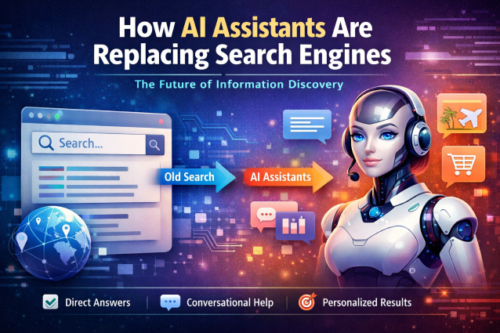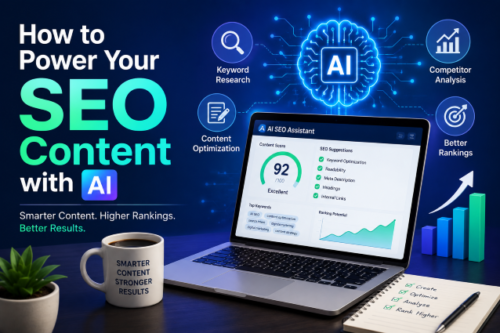



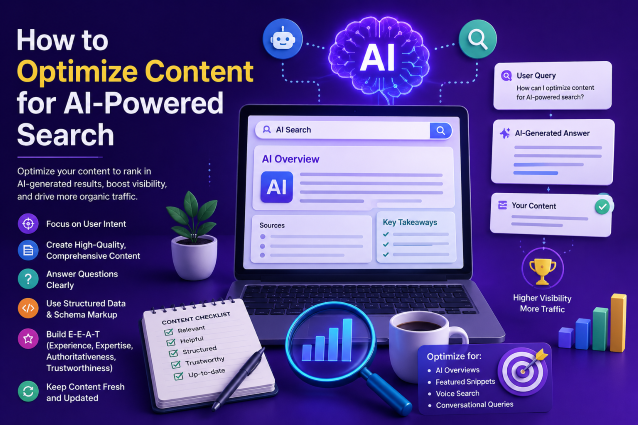
Online user behavior and searching habits continue to evolve rapidly. The way we find answers to our questions has changed significantly over time from only relying on traditional search engines (e.g., Google) to searching through other types of AI-powered systems (e.g., AI overviews, AI-powered chatbots, and generative AI in AI platforms) that help users find content differently than before.
For example, most traditional search engines return a list of links to related webpages, while many AI-powered search tools return one or more direct responses to users’ queries after evaluating data from a variety of different types of sources.
With this change in behavior by users searching online, businesses must adapt their content strategies as well. Businesses should still care about appearing on the first page of results within traditional search engines; however, appearing in at least one AI-generated response will also be an important way for businesses to get visibility in front of their potential customers.
If brands want to be able to compete effectively in 2026 and beyond, they will need to optimize their content to work with both traditional search engines and AI-enhanced search experiences.
Understanding AI-Powered Search
AI’s ability to help you search relies on its utilization of AI, which allows it to understand how people intend to use search terms in both context and natural language. Instead of focusing solely on exact matches of your keyword phrases, AI-powered Search will determine what your search terms mean and create complete, relevant answers for you.
More and more people are asking these types of questions in natural language and having conversations with them, such as:
- What is the most effective way for small businesses to use SEO?
- What can I do to increase the amount of organic traffic coming to my website?
From which channels of digital marketing can I expect to generate the most return on investment (ROI)?
The objective of AI-Powered Search Platforms is to deliver complete answers as quickly as possible, so an emphasis on producing high-quality and trustworthy content will be critical.
Focus on User Intent Instead of Keywords
Previously, the primary focus of traditional SEO was searching for products by using specific keywords. However, in today’s world, the focus has moved toward targeting users’ intent based on what they want instead of targeting a specific keyword or phrase. Therefore, when you write your content, you should ask yourself these two questions:
1) What problem are users attempting to resolve?
2) What information do users seek?
Your content should answer both questions in detail.
Instead of writing multiple short articles to target a similar keyword, your content should be one comprehensive and well-thought-out resource that comprehensively addresses a defined topic.
For example, if you were going to write an article about email marketing tips, you would want to provide a comprehensive resource that provides information and insight into email marketing strategies, tools, process and automation options, segmentation/personalization, performance metrics, and considerations to take into account.
Create Comprehensive Topic Coverage
For AI systems, much of their preferred content conveys expertise along with comprehensive knowledge.
To increase your odds of inclusion in an AI-generated response:
- Cover topics in depth.
- Include practical examples.
- Answer common questions.
- Address beginner and advanced concepts.
- Provide actionable insights.
Using topic clusters can also help you optimize for AI search. Create a pillar page around a broad topic and link to additional articles relating to specific sub-topics.
This will help you build awareness within your industry and demonstrate your knowledge to AI systems and search engines.
Use Clear Content Structure
The application of AI algorithms is most efficiently applied against well structured content.
Follow these best practices:
1. Use Descriptive Headings—Break Content Up Into Logical Sections Using H2 / H3 Headings
2. Directly Answer Questions—Be Concise; Answer The Questions Up Front And Then Add Detail After That
3. Use Bullet Points and Lists—Lists Will Assist AI Systems Identify Key Information Very Quickly
4. Include Summaries—A brief summary section can enhance both usability and understanding of the content by ai systems.
Content Provided In A Well Structured Format Is More Likely To Have Been Cited In An AI Generated Response.
Strengthen E-E-A-T Signals
The four criteria that affect how much visibility or performance a piece of content has in searches are E-E-A-T. As search engines develop capabilities that utilize artificial intelligence, the criteria for what constitutes a “good” or “relevant” piece of content will continue to focus on whether it has been published by a reliable source that has subject matter expertise. To develop your E-E-A-T signals, focus on publishing content by authors who demonstrate knowledge and expertise in the field they are writing about. Provide author profiles, credentials, and a description of their relevant experience, which will help to establish a level of credibility. Where possible, provide supporting evidence (by way of third-party sources, industry reports, references, etc.) to support what you present in your content. The more you can share your real-life examples, case studies, and practical applications with your readers, the more you will also help communicate an expertise level and a contribution to the value your reader receives. You should also update your content frequently to make sure the information remains accurate, relevant, and useful. By continuously demonstrating to both search engines and AI systems a level of genuine expertise, authority, and trustworthiness, this increases the odds of the engines and AI recognizing your content as being credible.
Optimize for Conversational Queries
AI-powered search relies heavily on natural language processing. Users now search using complete questions rather than short keyword phrases.
Instead of focusing only on “best SEO tools“
Also optimize for:
- What are the best SEO tools for small businesses?
- How do SEO tools improve search rankings?
Including natural language questions throughout your content increases relevance for conversational search queries.
Add Structured Data
Structured data allows search engines to comprehend your content more efficiently than ever before.
Schema markup can give search engines context for the following types of items: articles, FAQs, reviews, products, organizations, and events.
Making it easier for search engines and AI systems to find your important information and show it in search results accurately will happen by adding structured data markup to your website.
Prioritize Original Insights
With the vast amount of information available on the internet today, it is increasingly difficult for companies to be noticed. As Google’s AI-revolution continues to evolve, the AI search engine will focus more on providing results based on new ideas, original viewpoints, and first-hand experience, rather than providing results based on the same page being uploaded to many different websites.
To increase the chances of your articles being seen in AI-Generated Results, you need to focus on developing unique content that actually contains value, based upon your industry knowledge, your own real-world experiences, case studies, research, and original data. Providing practical insight as an example of what you have done adds to the credibility of your work and puts your company on the radar when people do research.
Original content will not only attract more visitors but also increase the chances of your website being referenced or recommended from search platforms like Google or other AI-driven search platforms.
Improve User Experience
While developing high-quality content is critical, having quality content isn’t enough to generate high performance in search results alone. A user’s experience is an important ranking factor for both traditional search engines and artificial intelligence based search systems. A website that provides a good user experience (good load times, good performance on mobile devices, easy-to-use navigation) increases the likelihood that visitors will engage with the content for a longer period of time. Providing visitors with websites that have clearly defined layouts, easy-to-read and understand fonts, organized sections within the page, and minimal distractions enables visitors to efficiently find the information they are searching for. Likewise, businesses should avoid including pop-up ads or other intrusive elements that disrupt a user’s browsing experience. Providing visitors with a positive user experience will result in higher visitor satisfaction and will be viewed by search engines as a high quality signal, resulting in higher search engine rankings and greater online visibility.
Keep Content Fresh and Updated
Search engines that utilize artificial intelligence will prioritize the accuracy, relevance, and timeliness of collected user input data. Because something that was considered important last year might not necessarily represent the present day’s best practices, trends, methods and tools; it is imperative to continually update current information in order to maintain its credibility and usefulness to users. To ensure they are providing accurate representations of the state of things, businesses must frequently evaluate and update their existing data (e.g., statistics, trends, examples, software tools, platform changes, recommended strategies, etc.). The continual update of data demonstrates the business’ ongoing talent level as an industry leader and desire to provide value to its target audience. This continuous update not only provides users with more trustworthy information but will also help improve a website’s traditional search rankings along with increasing the possibility of being found within an AI-based search engine.
Conclusion
To enhance your AI-driven search through high-quality optimized content, you need to combine proven old-school SEO techniques with innovative new ways to create and publish content for users. Think about how to develop content that matches user intent, has everything that they could possibly want to know about that subject matter, is written in a casual conversational style, and conveys strong E-E-A-T signals, plus an excellent user experience. By optimizing their content using these five criteria, businesses improve their chances of being found in both AI-generated search results and traditional search engines. Companies that focus on delivering great quality, authority, and value to their customers will be in a position to capture organic traffic through AI-based searches and have sustainable future online success.