



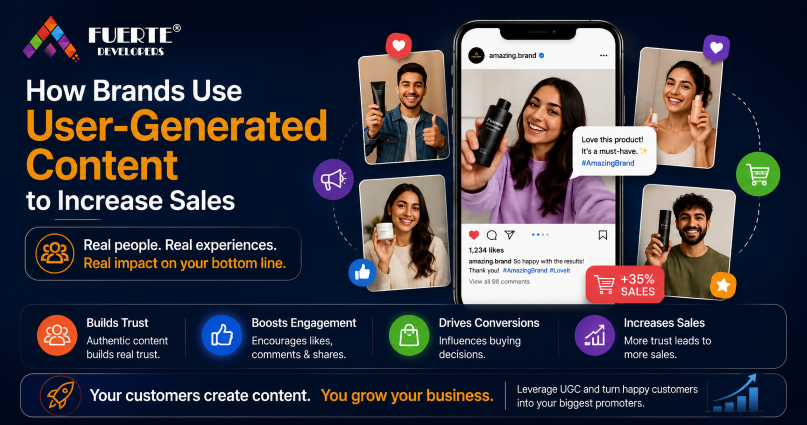
Consumers place a greater emphasis on the words of their peers than they do advertisements when making purchasing decisions. A well-established brand advertisement will inform a shopper that a product is quality; the validity of that claim will then be demonstrated by customer images, reviews, and unboxing videos, as opposed to relying on an advertisement alone. This variance in quality leads to UGC being one of the most significant channels that a brand can leverage to convert interest into a sales transaction.
UGC (User-generated content ) is defined as the potential for creating a piece of content using any form of customer-generated content; to date, UGC accounts for over 80% of all online content published. The reason for this consideration lies in the fact that UGC is perceived as authentic, cost-effective, and highly persuasive in ways that no other form of marketing can provide. As such, brands continue to leverage UGC as an essential component of their marketing plans to generate additional sales, and you too can take advantage of this.
Why UGC Sells
Social proof is the primary reason UGC is effective. When consumers are hesitant to make a purchase, they will seek out additional evidence from other consumers for confidence in their choice of purchase. When you see actual customers using and enjoying a product, this reduces the degree of perceived risk associated with the purchase.
When you see a 5-star review from a customer who sounds similar to you vs. when a company tells you their product is excellent, it adds to the element of trust from other consumers. Other consumers are likely to have a neutral opinion on a particular product compared to the brands that manufacture them, simply because UGC is composed of “everyday” consumers, as opposed to paid advertisements, and therefore eliminates any perceived bias from the purchasing decision.
Usage of UGC by Brands to Increase Sales
1. Customer reviews on product pages
The best and simplest way to leverage UGC for increased sales! When customers are able to see products that have been recommended by others in real-time, it helps them feel confident enough to make the decision to purchase. Additionally, using star rating/criteria to either highlight or de-emphasize category products will drive additional clicks to these pages (which in turn leads to more purchases).
2. Customer photos or videos
Providing real photo or video evidence of a product as being used by others helps develop both an accurate expectation of the product and a satisfying experience. When an accurate expectation is established, it drives a higher conversion rate because there’s nothing more important than having consumers actually using your merchandise at that very moment. Short-form video has become one of the biggest contributors to driving sales through social platforms.
3. Social proof in advertisements or social media
Advertisements that include customer-generated content outperform advertisements that do not use customer-generated content because they have a better chance at looking and appearing like actual, organic social media ads. Brands also reshare customer-generated content on their own social accounts, which allows them to either have more posts in their social calendar or reward the customer who created that content for creating it, therefore generating a higher chance of these customers producing more (valuable) customer-generated content in the future.
4. Customer Reviews and Case Studies
When selling more expensive or more considered items, detailed testimonials and case studies offer value. A story that tells you about the problem the customer experienced, how they changed after making the purchase, and why would be much more influential than a generic endorsement.
5. Hashtags and Community
Hashtags place a brand name on customer-produced content, also known as UGC and allow customers to create UGC under the umbrella of a branded hashtag and generate UGC for the brand while creating a sense of community around the product. This type of content will provide material for marketing, the sense of community will help increase customer loyalty and increase the frequency of repurchase.
6. Customer Q&A
Allowing existing customers to respond to questions from potential customers is an excellent way to eliminate friction at the point of sale and provide an additional layer of credibility. Answers from other customers are generally more credible than answers from the brand.
How to Encourage More UGC
Great UGC will not happen unless it is cultivated by brands.
1. Know the best times to ask for UGC
Asking customers for a review and/or photo as soon as they receive their purchase will maximize the chances of them providing the UGC. Send a quick email follow-up shortly after delivery to request their input.
2. Make it easy for customers to provide UGC
Remove barriers to submitting UGC. Use shorter submission forms, allow customers to upload the photo in the click of one button, and provide clear instructions as to where to submit it.
3. Encourage participation with minimal incentives
Using discounts, points, or giveaways or featuring a customer might all increase participation drastically, and there is nothing wrong with making sure customers know they are receiving an incentive.
4. Create great reasons for customers to share
Great packaging, great product experience, and fun hashtags can all provide customers with reasons to post about your brand and products.
5. Engage with and share customer UGC
When you “like,” comment on, and recirculate customer content, this shows that you appreciate them and can encourage others to share their UGC.
Proceeding with Caution
UGC is only effective while it remains authentic, therefore, there are a number of things you should keep in mind. Always obtain permission before using another person’s content in any advertising or on your website. Disclose clearly to customers prior to giving them any incentive that they are receiving an incentive, as most advertising regulations dictate in most regions that you must do so. Don’t screen out all negative UGC because if you have a perfect rating, it appears false, and your response to negative UGC can be persuasive as well. Remember, the only value UGC has is in its authenticity; therefore, you should strive to protect it.
Measuring the Impact
Use UGC as a measurable marketing channel instead of something considered optional. You will want to assess the conversion rates for your product pages with and without consumer-generated content or UGC and monitor the number of clicks and engagements from UGC-based ads compared to brand advertisements. You should also track returns to see if taking customer photos provides more clarity to customers when it comes to their expectations. The data will generally show that product pages or ad campaigns with real customer input will generate far more conversions than without, thereby warranting further investment in tracking and gathering.
Conclusion
UGC allows your consumers to perform the majority of your work for you in the sense that they can do your most effective selling. UGC builds the trust necessary to make an immediate purchase during the exact time a person has self-doubt. UGC costs a fraction of what it would cost to gather brand-created content, and it has the potential to grow along with your customer base. Brands that regularly gather, promote, and reward consumers that create UGC are doing much more than adding to their marketing collateral. They are eliminating one of the largest barriers to the purchase: doubt.
If you have not started developing processes to ask your customers for UGC (i.e., reviews, photos, or stories) and to promote the UGC in front of potential buyers, you are missing out on one of your strongest salespeople.