


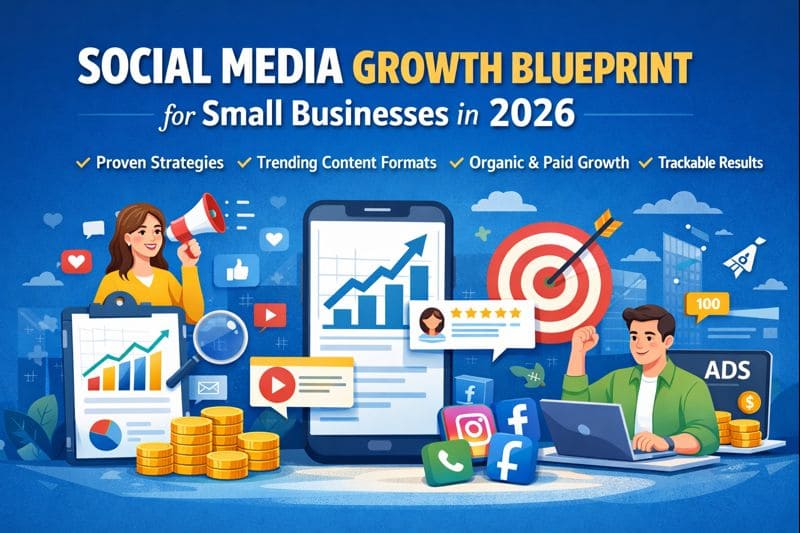
In 2026, social media is no longer just a visibility tool—it is a growth engine for small businesses. Customers now judge a brand’s credibility, quality, and trustworthiness based on its social media presence even before visiting the website or making contact.
Many small businesses struggle because they post inconsistently, follow trends blindly, or lack a structured approach. This blog explains a step-by-step social media growth blueprint designed specifically for small businesses that want sustainable results, not temporary engagement spikes.
Why Social Media Is Essential for Small Businesses in 2026
Today’s customers spend a significant part of their day on social media platforms. They use Instagram, Facebook, LinkedIn, and YouTube not only for entertainment but also to discover brands, compare services, and make buying decisions.
For small businesses, social media offers a powerful advantage—it allows direct communication with customers, builds trust through real content, and delivers visibility without massive budgets. A strong social presence creates familiarity, and familiarity builds confidence. In 2026, businesses that ignore social media risk becoming invisible.
Step 1: Define Clear and Measurable Goals
The foundation of any successful social media strategy is clarity. Before posting a single piece of content, small businesses must clearly define what they want to achieve. Without goals, social media becomes random activity instead of a growth tool.
Your goals may include increasing brand awareness, generating qualified leads, driving website traffic, building a local audience, or boosting sales through paid campaigns. Once goals are defined, content becomes more purposeful. Every post, reel, or story should move the audience one step closer to that goal. Clear objectives also make it easier to measure performance and improve results over time.
Step 2: Choose the Right Platforms for Your Business
One of the biggest mistakes small businesses make is trying to be present on every platform. In 2026, this approach leads to burnout and weak performance. The smarter strategy is to focus on two or three platforms where your target audience is most active.
Different platforms serve different purposes. Instagram is ideal for visual storytelling, local reach, and D2C brands. Facebook remains strong for community building and local advertising. LinkedIn works best for B2B companies, consultants, and service providers. YouTube supports long-term brand authority and discovery, while WhatsApp Business helps convert leads into customers.
Focusing on the right platforms ensures better engagement, stronger visibility, and higher returns.
Step 3: Create Content That Builds Trust and Authority
Content in 2026 must do more than look good—it must educate, connect, and convert. Small businesses should avoid posting only promotional content. Instead, they should focus on content that builds long-term trust.
Effective content includes educational posts that solve real problems, authority-driven posts such as case studies or results, and trust-building content like testimonials, behind-the-scenes videos, or founder stories. Engagement-focused content such as questions or relatable scenarios keeps the audience active, while promotional posts should be used strategically.
A balanced content mix ensures your audience sees you as a helpful brand, not just a seller. The most successful businesses follow the 80/20 principle, where most content delivers value and only a small portion promotes services or offers.
Step 4: Use Trending Content Formats Strategically
Formats play a crucial role in reach and engagement. In 2026, short-form video dominates social media. Platforms prioritize reels, shorts, and vertical videos because they hold attention and drive interaction.
Small businesses should focus on creating short videos that explain problems, share tips, show transformations, or tell simple stories. Carousel posts with clear headlines also perform well for educational content. Founder-led videos are especially powerful because they humanize the brand and build credibility. Customer stories and before-and-after visuals further strengthen trust and engagement.
Step 5: Maintain Consistency with a Posting System
Consistency is more important than frequency. Posting daily without quality delivers weaker results than posting fewer times with purpose. Small businesses should create a realistic posting schedule they can maintain long-term.
A content calendar helps plan topics in advance, maintain brand consistency, and avoid last-minute stress. Posting three to five times per week on Instagram or two to three times per week on LinkedIn is sufficient when content is valuable. Over time, consistent posting builds momentum and improves algorithm performance.
Step 6: Combine Organic Content with Paid Advertising
Organic reach alone is no longer enough to scale growth. Paid advertising plays a critical role in expanding reach and generating faster results. However, ads should support organic content—not replace it.
A smart paid strategy includes boosting high-performing organic posts, running lead generation campaigns, retargeting website visitors, and using location-based targeting for local businesses. When organic trust meets paid visibility, conversion rates improve and customer acquisition costs reduce.
Step 7: Track Performance and Optimize Regularly
Tracking performance is what separates growth-focused businesses from those guessing blindly. Likes and followers may look good, but they don’t indicate success. Small businesses should focus on metrics such as reach, profile visits, website clicks, inquiries, and cost per lead.
Regular analysis helps identify what content works, what needs improvement, and where to invest more effort. Data-driven decisions lead to consistent growth.
Conclusion
Social media success in 2026 is not about luck or virality. It is about following a clear, repeatable growth blueprint. Small businesses that define goals, focus on the right platforms, create valuable content, stay consistent, leverage paid ads, and track performance will grow faster and more sustainably.
By treating social media as a strategic business tool instead of a posting activity, small businesses can build trust, attract customers, and compete confidently in the digital space.
Social media management services
Need a custom social media strategy for your business?