


For many businesses, digital marketing starts with a simple goal: be visible online. Get a website, post on social media, run a few ads, maybe rank on Google. And for a while, that feels like progress.
But visibility doesn’t always translate into growth.
Modern businesses are learning this the hard way. Traffic goes up, followers increase, impressions look good—but sales stay the same. That’s where growth-focused digital marketing changes the conversation. It shifts attention from “how many people saw us” to “how many people actually did something.”
What Growth-Focused Digital Marketing Really Means
Growth-focused digital marketing is about treating marketing like a business system, not a creative experiment. Every activity has a purpose. Every channel is connected. And every decision is measured against one question: Is this helping the business grow?
Instead of running isolated SEO, social media, or ad campaigns, growth-focused marketing looks at the full journey:
How people discover your brand
Why they trust you
What convinces them to contact or buy
What makes them come back
When marketing supports each stage of this journey, results start to compound.
Traditional vs Growth-Focused Digital Marketing
The difference becomes clear when you compare the two approaches side by side:
| Area | Traditional Digital Marketing | Growth-Focused Digital Marketing |
|---|---|---|
| Main Focus | Visibility and presence | Leads, conversions, and revenue |
| Success Metrics | Likes, views, followers | Inquiries, sales, ROI |
| Strategy Style | Platform-based efforts | Funnel-based strategy |
| Decision Making | Assumptions and trends | Real user data |
| Business Impact | Short-term results | Long-term, scalable growth |
Growth-focused marketing doesn’t reject creativity—it simply gives creativity a direction.
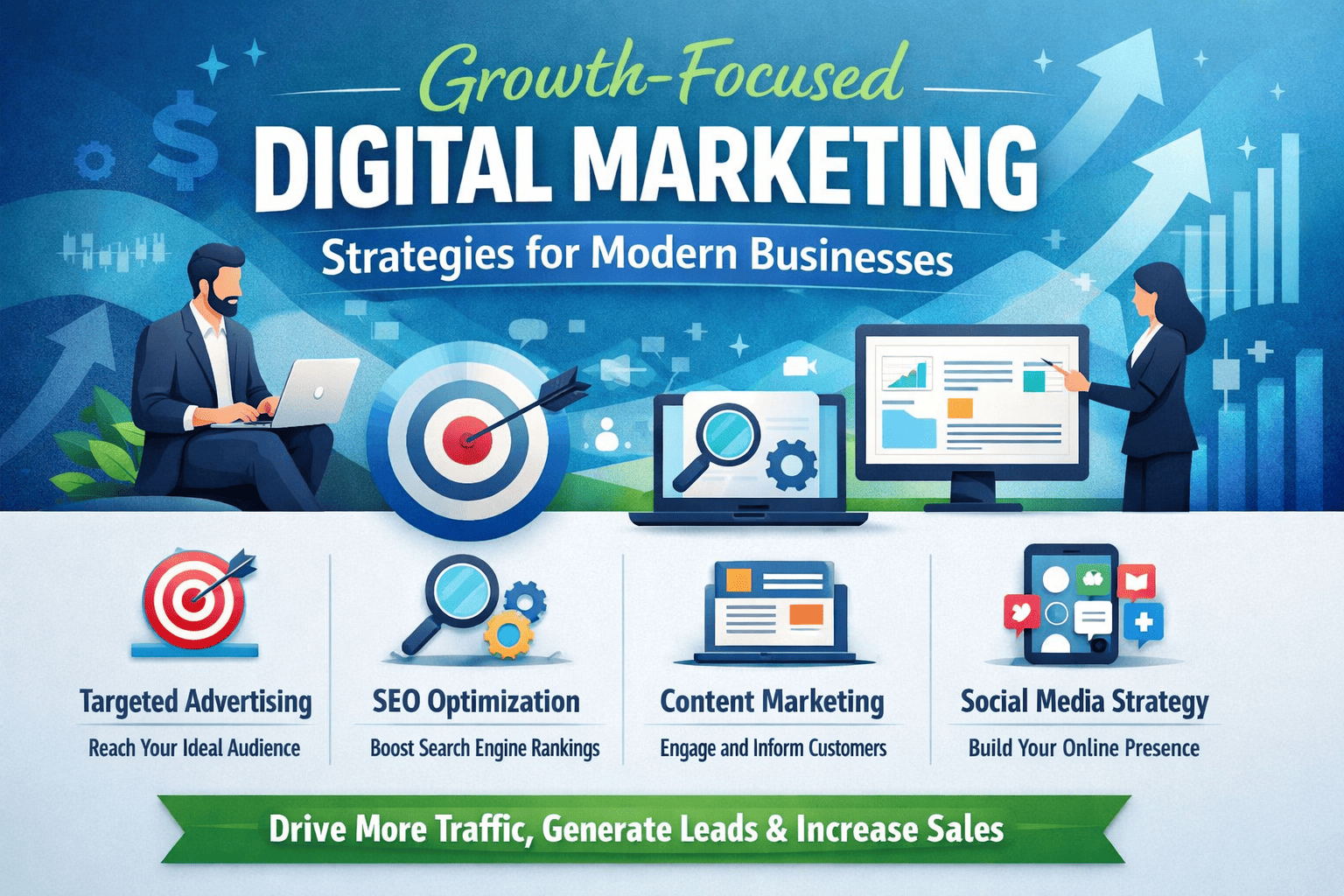
SEO That Attracts the Right People
SEO is often misunderstood. Ranking high on Google feels great, but ranking for the wrong keywords does nothing for business growth.
A growth-focused SEO strategy targets search intent, not just search volume. That means focusing on keywords used by people who are actively looking for solutions, services, or answers—not just browsing.
It also means improving website experience. Slow pages, confusing layouts, or weak content can undo all the benefits of good rankings. When SEO is aligned with user intent, traffic becomes meaningful.
Content That Builds Trust, Not Noise
People don’t read blogs because brands ask them to. They read because the content helps them make better decisions.
Growth-focused content marketing focuses on:
Explaining real problems
Answering common customer questions
Sharing practical insights, not sales talk
When content feels honest and useful, it builds credibility. Over time, that trust turns into inquiries, leads, and long-term customers.
Social Media with a Clear Purpose
Posting regularly on social media is easy. Posting with intent is harder.
Growth-focused social media marketing starts with clarity:
Who are we speaking to?
What action do we want them to take?
How does this content support business goals?
Instead of chasing viral trends, the focus is on consistency, relevance, and engagement that leads somewhere—website visits, messages, or brand recall.
Paid Marketing That Supports Growth, Not Guesswork
Paid ads can accelerate growth, but only when used strategically. Growth-focused performance marketing relies on testing, tracking, and refinement.
Rather than spending blindly, businesses analyze:
Which ads bring quality leads
Which landing pages convert better
Which audiences actually buy
Over time, budgets shift toward what works, making paid marketing more predictable and profitable.
Why This Approach Matters Today
Modern customers are informed and selective. They don’t respond to noise—they respond to clarity and value. Growth-focused digital marketing helps businesses stay aligned with real customer behavior, not assumptions.
It reduces wasted effort, improves decision-making, and creates systems that grow stronger over time.
Closing Thoughts
Growth-focused digital marketing isn’t about doing everything. It’s about doing the right things consistently. When strategy, data, and execution work together, marketing stops feeling random and starts driving real business results.
For modern businesses that want more than visibility, growth-focused digital marketing is the way forward.