


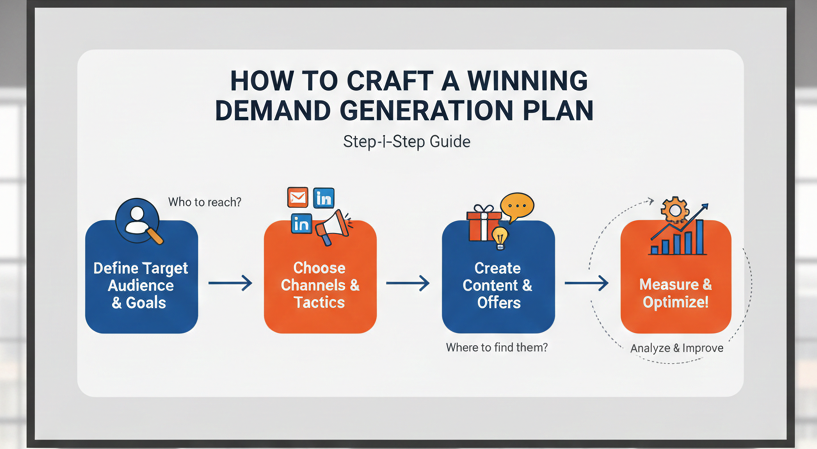
Most companies don’t have a demand problem. They have a clarity problem. They launch campaigns, run ads, publish content, and collect leads, but revenue doesn’t grow the way they expect. Demand generation isn’t about doing more marketing. It’s about doing the right marketing in the right order with the right message.
If you want to craft a winning demand generation plan, you need to think beyond lead forms and ad clicks. You need a strategy that builds awareness, earns trust, and guides people toward buying naturally.
What’s Demand Generation?
Demand generation is not the same as lead generation; it’s more than getting leads.
Think of lead generation as asking for an email. Demand generation is more like offering something cool that people will care about. It’s getting people interested before they even think of buying anything. It educates. It builds authority. It positions your brand as the obvious choice long before a sales conversation happens.
In today’s market, buyers research independently. They compare options. They read reviews. They consume content. By the time they talk to sales, they are already halfway through their decision.
If your brand isn’t visible during that early research phase, you’re invisible altogether. Demand generation is important for this reason.
Step 1: Start With Clear Business Goals
Before you plan anything, decide what doing well looks like to you. Do you want to make more money each year, or is there something else? Expand into a new market? Shorten your sales cycle? Improve customer quality?
Your demand generation plan must connect directly to revenue goals. Want to increase yearly income? Great! If you want $1 million in new business, you need to know:
- How many sales you need to make
- The average size of each sale
- Your success rate in closing deals
- How many good leads will you need?
When you break down growth like this, marketing isn’t a guessing game anymore. You can actually measure it.
Step 2: Know Your Audience
If you try to talk to everyone, you’ll interest no one.
Start by really understanding who your ideal customer is:
- What issues do they have?
- What makes them start looking for answers?
- What reasons might they have for not buying?
- Who has input on their choices?
For businesses, this often means understanding all the people involved, like decision-makers and finance teams. For consumers, it means figuring out what motivates them, both emotionally and practically.
The better you know your audience, the clearer your message will be. And when things are clear, people pay attention.
Step 3: Build a Strong, Simple Value Proposition
Most businesses struggle to answer this simple question:
Why should someone pick you? And not in a long, complicated way. In one sentence.
A strong value proposition clearly explains:
- What you do
- Who it’s for
- What makes you different
If your messaging sounds like everyone else in your industry, you will blend into the background.
Demand grows when your positioning feels specific and confident. It should be obvious why you’re the best choice.
Step 4: Understand How Buyers Make Decisions
A huge mistake companies make is only targeting buyers who are ready to buy.
But getting people interested starts way before that.
1. They realize they have a problem.
2. They explore ways to solve it.
3. They decide on a solution and pick who to buy it from.
Your content should fit each step.
Early on, share helpful blog posts, industry info, and smart ideas. Later, use case studies and comparisons. Near the end, offer product demos or chats.
When your content matches what buyers are doing, you help them move forward.
Step 5: Create Consistent, Valuable Content
You have to have content to build demand. But just throwing stuff out there won’t work. You need a content plan that focuses on what your audience cares about. Write about things that answer their questions. Give real advice. Share what you know. Explain hard stuff simply. Don’t try to sell in every piece. Just become someone people trust. When people keep seeing useful information from you, they start to trust you. And trust creates demand.
Step 6: Be Everywhere, But Smart About It
Demand doesn’t grow from just one place. A good plan uses many places, like search engines, social media, ads, emails, and online events.
Each one does something different. SEO makes you visible over time. Ads get you seen fast. Emails build relationships. Retargeting reminds people about you.
But working together is more important than how much you do. Your message should be the same everywhere. It should feel like one smooth experience. Being consistent helps people remember you. Remembering you builds trust.
Step 7: Get Marketing and Sales on the Same Page
Demand generation falls apart if marketing and sales aren’t in sync. Marketing might send leads that sales doesn’t see as good. Sales might take too long to follow up. Deals can be lost.
To keep this from happening, decide what makes a lead good. Agree on how quickly sales should reach out. Set up ways for the teams to give each other feedback so they can both get better.
When marketing and sales work together, instead of doing their own thing, demand turns into income better.
Step 8: Take Care of Leads, Don’t Pressure Them
Not everyone’s ready to buy now. Some people need time. A solid demand generation plan involves taking care of leads. Stay in touch with them using email, helpful stuff, and retargeting.
Don’t push for a sale right away. Instead, give them value over time. As they get to know you, they will have less reason to not trust you. When they’re ready, they’ll choose you.
Step 9: Track What Actually Matters
Numbers that look good but don’t mean anything can fool you. Lots of website visitors doesn’t mean more income. Social media likes don’t mean sales.
Focus on what matters:
- Pipeline growth
- How much you pay for each good lead
- How many leads turn into customers
- How much it costs to get a customer
- How much income comes from your efforts
Use this info to make your plan better. Demand generation plans that win are always changing. They adjust to how things are going, not what you think should happen.
Step 10: Think Long Term
Demand generation isn’t a fast way to get rich. It’s a way to grow over time. It might take months to see results, especially if there’s a lot of competition. But as more people know about you and trust you, growth takes off.
Brands that stick to a plan do better than those that try quick tricks. Demand is built slowly, not overnight.
What a Winning Demand Generation Plan Really Looks Like
Basically, a good plan is built on:
- Knowing what you stand for.
- Understanding your audience really well.
- Creating content that matters.
- Multi-channel consistency.
- Strong sales alignment.
- Ongoing optimization.
There’s no magic formula. There’s no hidden hack. There’s only strategy, clarity, and consistent execution. When done properly, demand generation transforms marketing from reactive to predictable.
Instead of chasing prospects, you attract them. Instead of convincing people to care, you give them reasons to. And that’s what a winning demand generation plan truly does.