


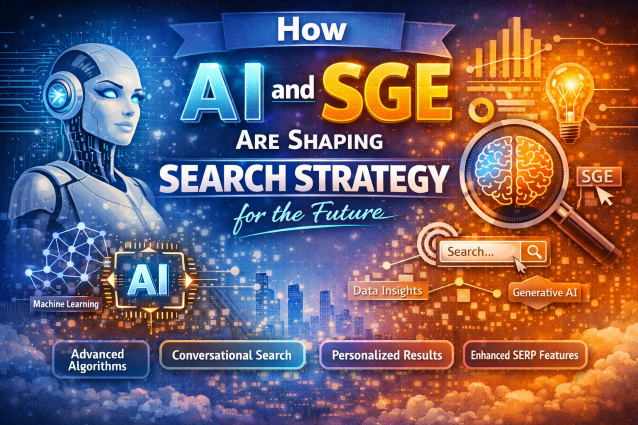
In the past year there has been more change in the world of search than there has been in the last ten years combined. Search Generative Experience (SGE) is currently being rolled out across the United States by Google and will soon be available everywhere else around the world. Similarly, there are many alternative AI based systems available geared towards answering consumers’ questions, many of which (i.e., ChatGPT,Perplexity,Claude, etc.) typically have also generated clicks on websites prior to 2023. In fact, based on data compiled by SparkToro, more than 65% of the total searches conducted via Google are zero-click searches. where a searcher is provided their answer directly within the SERP and does not click through to any specific website.
Consequently, if your SEO strategy was designed based on the search landscape in 2022, then it is now at best partially obsolete but at worst not viable whatsoever. While the fundamentals of SEO have remained unchanged, everything else the tactics employed, the ways in which SEO performance is measured, and competitive dynamics have evolved to such an extent that companies that act according to current users’ behaviors will enjoy significant competitive advantages over companies that delay their efforts to modify their strategies.
The search strategy for the future is therefore not a predictive document but rather a tactical plan based on real time data and objective findings. Therefore, allowing for meaningful implementation of a company’s SEO strategy utilizing proven best practices.
How AI Overviews Affect Your Organic Traffic
When Google launched their AI overview, the initial buzz was one of panic and disbelief. Google is going to deliver answers directly on their search page. Why would anyone need to visit a website?
The truth is that this probably won’t affect you. The majority of early-stage data and studies show that Google is only creating AI overviews for searches on informational terms and phrases. Examples of “informational keywords” are “How does digital marketing work?” or “What is the role of social media marketing?”
When someone types a commercial or transaction-based query into the search engine (i.e., best digital marketing company near me” or “buy Laptop online”), Google is continuing to produce traditional blue link results that have solid click-through rates.
Since AI Overviews will be providing many answers to informational queries, this impacts organic traffic (SEO) in two significant ways.
1. If you’ve been heavily investing in top-of-funnel informational type content to generate traffic volume, you now have an overall decline in volume. AI Overviews are capturing an increased share of clicks from users for queries of an informational intent.
2. If you rely on organic traffic to generate leads for your business, the intent behind someone’s query searching for transactional/ commercial type words and phrases has become a much greater point of value/importance. These types of queries have not been replaced by AI Overviews, and the competition for ranking for transaction/commercial intent keywords will continue to be on the rise as more and more businesses take notice of this change in behavior by Google.
Rather than throwing away all of your informative content, the strategic plan should include using more than just driving traffic as a purpose for that content. Your informative content should help you build topic authority and familiarize users with your brand while providing signals of expertise that impact both the traditional methods of search ranking and AI generated results.
Search Strategy for the Future
This is the plan for achieving success in today’s and tomorrow’s search world
1.Transactional and Commercial Intent Content
Put your money where your mouth is. Develop content geared toward true buyer behavior, as opposed to browser behavior. The type of content that fits this type of structure includes service pages, product pages, comparison pages, and local landing pages designed to cater specifically to commercial-intent queries. Therefore, these types of pages are least likely to be influenced by AI Overview and most closely tied to generating revenue.
For all of the services you provide, create a dedicated, comprehensive page targeted towards the types of commercial-intent queries being searched by consumers. Furthermore, each market you target should have its own separate, location-specific page that addresses local consumer behavior. These pages must be developed with a focus on driving conversions as opposed to simply driving search engine rankings.
2. Keyword Volume and Topical Authority
The single keyword ranking is an old world; Google is now focused on assessing a site’s topical authority (how well does your site cover that subject?). If you’re covering Digital Marketing thoroughly, such as Maintenance Guide, Equipment Comparisons and Emergency Replacements, you’ll rank higher for ALL Digital marketing than a site with one optimized digital marketing page.
Create Content Clusters Create a content cluster for each main topic and create a pillar Page that covers that topic thoroughly, along with support pages that cover individual topics as subsets. This creates citational evidence of your site’s topical authority in the eyes of Google and establishes the type of comprehensive resource that would be referenced by A.I. Systems.
3. E-E-A-T Signals
Google places a great emphasis on its E-E-A-T framework (Experience, Expertise, Authoritativeness, Trustworthiness) due to the extreme amount of AI-generated content that now exists on the web. Google needs signals that allow it to distinguish between expert content created by real people and AI-generated “fluff.” E-E-A-T is the primary framework for establishing that distinction.
Examples of the types of E-E-A-T Signals to look for when developing your content include bio pages of authors that feature accounts of their credentials/experience; original research/data; first person experiences/case studies; quotes and citations from other experts; and a clear overall organizational identity through your About page, Team page, and Contact Name/Email address.
4. Technical Excellence
AI Overviews, as well as AI search systems, extract content from pages that are technically accessible (like Core Web Vitals), load quickly, and are structurally solid. If technical SEO is low (such as many technical errors), then it would be difficult for those pages to be referenced by AI systems, and ranking in traditional results would also be difficult.
Technical SEO fundamentals have not altered; they have increased in importance.
5. Brand Authority and Off-Site Signals
Within the scope of AI search, the businesses that will thrive are those businesses that have established themselves as brands that have true brand authority, which means being mentioned often in authoritative publications and having a high-quality backlink profile from those types of publishers and active and good-rated Google Business Profiles and a clearly identifiable and recognized name that AI systems identify and recommend.
Link building is not dead, it has evolved, so it is essential to focus on earning links from truly authoritative (and relevant) sources, rather than solely on quantity or using domain authority metrics alone.
What to Stop Doing in 2026
The future of SEO will involve leaving behind ineffective practices.
- Don’t continue optimizing your content solely for traffic volume from top-of-funnel informational keywords; now you’ll need to shift to an optimization model based on user intent and conversion rather than volume.
- Stop thinking of AI-generated content as a way to produce massive amounts of low-quality content quickly; this goes against Google/Algolia’s new method for rating helpful content. Therefore, producing large quantities of low-value, undifferentiated ai-generated content may result in penalties rather than creating growth opportunities.
- Don’t forget about zero click searches. Just because someone doesn’t click on your listing doesn’t mean they don’t receive value from seeing it. Brands that appear as part of “AI overview,” “Featured Snippet,” and/or “Knowledge Panel” gain brand awareness and authority by being present even if they are not clicked on. So, think about how you can optimize for visibility, not just click-throughs.
- Don’t continue using rankings alone to gauge success in SEO; AI Overviews, Featured Snippets, and Local Packs take up much more “real estate” now than years ago, making your site’s keyword ranking less reliable than in years past as a proxy for visibility or revenue. You should be tracking and measuring your organic sessions, organic attributed conversions, and revenue instead.
Conclusion
The core principles of SEO continue to remain unchanged: the three main values that govern success in search engine marketing are quality of the content, reliability of the technology used to deliver it, and trustworthiness or credibility of the publisher. However, what has evolved is how we see competition: as artificial intelligence continues to improve the overall quality of all brands available to the public. Traffic is being shifted away from traditional forms of information-based queries toward newer methods (e.g. AI powered citations and geographic searches), which provide consumers with the same characteristics as traditional methods do.
The companies that will thrive through 2026 and into the future will be those that build legitimate expertise within their area of business; they will STAND OUT within their niche of service and invest in the type of recognition/authority that an algorithm change will not be able to take.