


The use of artificial intelligence in marketing has evolved from being limited to being a simple marketing trend to now powering smarter campaigns and creating faster content, building better personal relationships with customers, and increasing the number of data-driven decisions made. By 2026, brands that have integrated AI into their marketing operations will find their marketing programs to be more effective while also reaching more customers than ever before. Brands that have adapted to these evolving marketing operations will have a clear competitive advantage over their competitors in this fast-changing digital marketing environment.
Why AI Automation Matters More Than Ever
When working on today’s marketing efforts, businesses are now working across multiple platforms; they have access to and are collecting large amounts of data, they need to be creating content on an ongoing basis, and they need to engage with their customers across multiple touch points. Given this everyday challenge of executing marketing efforts by way of manual processes is typically not viable.
Through AI automation, marketers can quickly save time on repetitive types of activities, improve campaign performance, deliver personalized experiences, conduct instant analysis of customer behavior, produce content more quickly, increase conversion rates, and reduce marketing expenses.
The most significant benefit of AI automation for marketers is not to replace marketers, but rather to allow marketers to work in a more intelligent and effective manner.
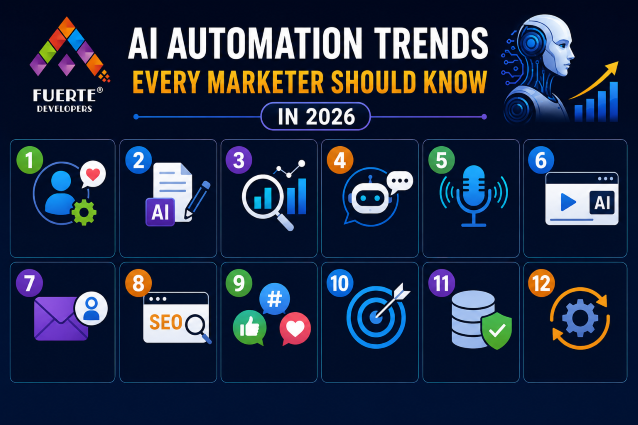
1. Hyper-Personalized Marketing
Brands use AI to provide extremely personalized experiences by using data collected from customer behaviors, interests, browsing history, and engagement patterns to create custom email communications, recommend products, design advertisements, and develop websites that will enhance customer engagement and increase conversion rates.
2. AI Content Creation
Through the use of AI-powered content generation tools, organizations can create blog posts, optimize their search engine results, create social media marketing materials, write advertisements, and create video scripts. The best approach is to combine the speed and efficiency of AI-generated content with a creative approach from humans, combining storytelling techniques and voice to produce engaging material.
3. Predictive Analytics
AI-enabled predictive analytics enable marketers to predict customers’ buying behaviors, determine which of their leads will convert, determine the optimal timing for their marketing campaigns, and minimize their advertising return on investment through lower advertising costs. By using data-driven marketing decision-making provided them through predictive analytics, organizations can take proactive steps to address issues before they arise.
4. Human-Like AI Chatbots
There is an increase in the number of businesses that are using AI chatbots to replicate human conversations and respond to customer inquiries in real-time, e.g., chatbots that answer customer questions, provide product recommendations, help with lead qualification, offer 24×7 customer support, etc. By using conversational AI, businesses are able to provide superior service to customers and also save money on customer support.
5. Voice Search Optimization
Today, more and more consumers are using voice search technology to find what they need. Therefore, marketers will need to optimize their content to be easily found using voice commands. One way to do this is to utilize FAQs , utilize long-tail keywords, and, most importantly, implement SEO best practices that are optimized for voice search.
6. AI-Powered Video Marketing
Videos can now be produced faster and at a lower cost due to automated editing, subtitling, voiceover, and short-format video creation using AI systems. The marketers have begun to produce their advertising materials using AI-enhanced video to advertise their products, brand, and services on many different platforms, including but not limited to Instagram Reels, YouTube Shorts, TikTok, and LinkedIn.
7. Smarter Email Automation
Automated email marketing based on AI technology is providing new tools to create hyper-personalized campaigns, understand and predict open rates, and identify the best times to send messages to customers based on customer journey data. Using behavior-based email (i.e., cart reminders and tailored suggestions) will improve your level of engagement with customers as well as increase your conversion rates.
8. AI SEO Optimization
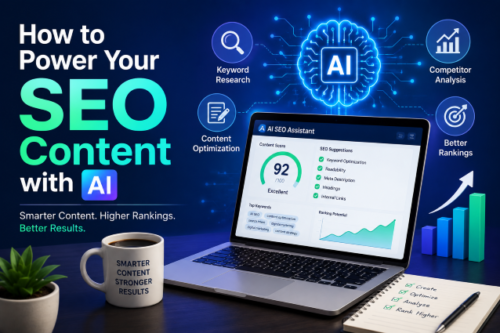
SEO tools using AI assist marketers with competitive analysis, keyword research, generating suggestions to improve content structure, and identify opportunities to rank in search engines. As an example, the quality, expertise, and focus on human-created content will continue to be a key driver for successful long-term search optimization.
9. Social Media Automation
AI-powered social media tools are transforming the way marketers manage social media by automating the scheduling of social media posts, creating captions, conducting audience analysis, and tracking social media trends. This allows marketers to create consistent social media content while managing an increasing volume of content across multiple social media platforms.
10. Advertising with AI
Several advertising platforms use AI to generate more accurate audience segmentation, bid strategies, and campaign optimization. Companies that use AI in advertisements experience higher returns for every dollar spent on advertising.
11. First-Party Data Strategies
Privacy regulations will continue to grow in 2023, So brands will focus more on the collection of first-party data by getting email Sign-Ups, loyalty programs, surveys of customers, and creating customer community. AI will help businesses organize and utilize their first-party data more efficiently.
12. Workflow Automation Using AI
Many marketing teams will be using AI tools To utomate many of the repetitive tasks associated with marketing – Reporting, Updating CRM’s, Managing Leads and Scheduling Campaigns. This will free up time for the teams to work on strategy, creativity, and growth.
Challenges Marketers Must Watch Out For
As we rapidly adopt AI automation across the marketing landscape, there are inherent challenges marketers must navigate, including over-automating, relying on generic AI-generated content, ensuring data privacy, and a heavy reliance on AI tools. While utilizing AI, it is important to remember that human creativity, strategic thinking, and the ability to communicate in an authentic way are key factors to the success of a marketing plan.
How Marketers Can Stay Ahead
In order to be competitive in 2026, marketers should adopt AI tools as early as possible, continue to tell their brand story, and develop their own personal brand; and they should strategically leverage the use of automation in their marketing efforts. The most successful marketers will leverage the productivity of AI with the creativity of man and data-driven management decisions.
Conclusion
AI automation will continue to evolve and create major changes in the marketing world, however, there will always be a need to balance the efficiency of AI with the creativity of humans to develop authentic relationships with customers. While technological advances can enhance the speed and growth of a company, relationships are built by humans.