


In the present day digital world, many companies must make a critical decision as to which route they will take to develop an online presence, either by creating a website or investing in social media. Each option has distinct advantages when it comes to establishing an online presence, as well as attracting customers and ultimately increasing revenue for your business; however, for starting businesses with a limited amount of resources, making such a decision can sometimes be difficult.
When it comes to determining where your company should be focusing most of its funds, here are some of the major characteristics associated with both platforms that may help you make this decision.
Why This Decision Matters
A business’s digital presence is usually the first impression potential customers have of it. For example, if someone discovers you through Instagram or Facebook (or by searching for your business on Google), they will expect to be able to identify who you are as well as what products and services you provide and how to find out if they can trust you.
Without a strong online presence, a business may lose thousands of potential customers to its competitors.
The Case for Investing in a Website First
A website is your digital headquarters. You own and control your website fully, unlike social media, where you’re only renting.
Why You Should Have A Website
1. Control Over Your Brand
Your website shows what your brand is all about without being limited by the designs available on social networks. You choose all of the design, content, user experience, and messaging used to tell people what you are about.
2. Credibility and Trust
Customers are more likely to have confidence in a business with a professional-looking website vs. only having a page on social media.
A website is an indicator that you are a legitimate business.
3. Search Engine Exposure
A website allows you to become an indexed website within search engines (through Search Engine Optimization) which helps potential customers find your business when they search for the products or services you provide.
4. Opportunity for Lead Generation and Sales
Websites can help capture leads through contact form submissions, landing page registrations, and newsletters, as well as e-commerce.
For businesses selling services and/or e-commerce businesses, this is very important.
Disadvantages of having a website
Cost – setting a website up has a cost associated with it
Requires ongoing maintenance
Need for SEO and content strategy to drive traffic to your website
A website alone will not automatically bring customers to your door without marketing!
The Case for Investing in Social Media First
Social media is an inexpensive and speedy way for businesses to get seen by consumers. They can utilize social media to establish direct connections with their audience via platforms such as Facebook, Instagram, and LinkedIn.
Some of the benefits of social media are:
1. Instant Access to your Target Audience
You can begin generating visibility almost immediately by using content/reels/posts/ads.
2. Improved Engagement
With social media, you can engage in real-time with your customers through comments, messaging, polls, and stories, which helps establish trust and build relationships.
3. Lower Cost of Entry
Creating social profiles is free, making it a great place for companies that are new or just starting out.
4. Increased Brand Awareness
If you consistently post on social media, this will help increase brand awareness and help keep your brand top-of-mind with consumers.
Here are some of the Disadvantages to using social media:
- You don’t own the platform.
- The algorithm may change, which can impact the number of people you will reach.
- Very few (or no) customization options are available.
- It can take longer to generate long-term assets.
If Facebook decides to change their rules, your reach could decrease overnight.
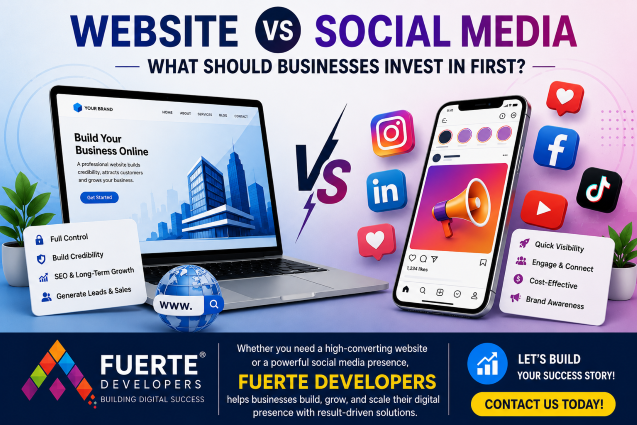
Website vs Social Media: Key Differences
| Factor | Website | Social Media |
| Ownership | Fully owned | Platform owned |
| Credibility | High | Moderate |
| Setup Cost | Medium to High | Low |
| Traffic Source | SEO, ads | Organic & paid |
| Customer Engagement | Limited | High |
| Long-Term Value | Strong | Depends on the platform. |
Which Investment is Right for Your Business?
When it comes down to making decisions about the type of investment that will benefit your business the most, look at where your company is currently at (in terms of stage and goals) and what type of results you are expected to see from that type of marketing.
If you are a professional service provider that provides consulting services or works with clients or customers to provide services, whether through an agency or as a sole proprietor, use your website as your first investment, followed by social media. This applies to law firms, clinics, consultants, and e-commerce brands.
In addition, if you have a limited budget or need to generate revenue quickly, consider using social media as your primary source of revenue, then invest in your website as you grow your business. This can be the case for restaurants, fashion brands, creators, and lifestyle businesses.
The Best Strategy: Use Both Together
Smart business owners do not choose one option over the other permanently but rather create a combination of both as part of their overall marketing plan because social media creates awareness of a business and drives leads or sales through their websites.
In other words, social media is used to drive traffic to a business, which can subsequently create customer loyalty through its website or drive revenue through its website and ultimately lead to sales. Thus, the combination of social media and websites creates an efficient and effective online marketing system that works together to create positive business outcomes.
Conclusion
There’s no definitive answer to the website vs. social media question; depending on your business goals, budget, and business model, one is likely to provide you with a better return on investment over time than the other. If your primary focus is to create long-term growth, build credibility, generate leads, etc., then funding your website first is generally a sound choice. Conversely, if you need immediate visibility and interaction with an audience, you would benefit much more quickly from social media than from your website. Ideally, however, both should be developed over a period of time so that the business has a solid and sustainable online presence.
At Fuerte Developers, we help businesses turn clicks into customers through strategic website development and impactful social media marketing.