


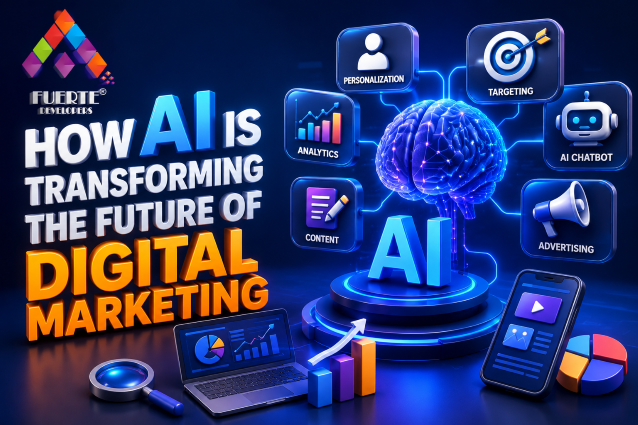
Digital Marketing Industry is evolving quickly; businesses can improve Engagement with customers and convert leads into sales by developing smart ways to communicate with them.
One of the important technologies that is dramatically changing how companies conduct their Digital Marketing efforts, is AI. AI offers companies the ability to make faster, smarter, more data-driven decisions about how to create a personalized customer experience and create automated advertising solutions and predictive analytics.
The use of AI for Digital Marketing efforts helps companies to gain a competitive advantage and improve overall business performance compared to non-AI users.
In this article, we will discuss how AI has revolutionized the digital marketing landscape and the importance of incorporating AI into your overall Digital Strategy.
1. Smarter Personalization for Better Customer Experience
Consumers in today’s world are looking for unique experiences when they are looking at websites, shopping online, or communicating with a brand. With the use of Artificial Intelligence, businesses can provide customized and personalized content to customers by tracking their activity (for example, what they like to buy or where they have been). For instance, Spotify uses AI to provide many playlists based on your previous listening habits, while Amazon has AI that provides you with items you would be more inclined to purchase based on your past purchase history.
The use of AI will help improve customer engagement and increase conversion rates; therefore, businesses can utilize this technology to maximize their revenue. Some examples of how companies can use AI in their marketing strategy are through:
1. Personalizing email campaigns
2. Product Recommendations
3. Personalizing dynamic website content
4. Creating personalized advertisements
By providing this level of personalized service, brands will develop a more loyal customer base while enhancing the overall level of satisfaction of their customers.
2. Better Customer Insights Through Data Analysis
AI-powered tools can process vast quantities of data much more quickly than human beings. When businesses look at how customers interact with them and the data collected when they visit a webpage (including what social media they use), they will have access to valuable information about what consumers like and want.
Marketing platforms like Google Analytics and HubSpot use AI technology as a way to help businesses figure out the following:
- User behavior
- Audience interests
- Content (which pieces perform better)
- Patterns of conversions
- Trends in customer journeys
By understanding these insights, marketers will be able to create more effective marketing campaigns and use data to make informed decisions.
3. AI Chatbots for Instant Customer Support
AI chatbots have greatly advanced customer service. They provide 24/7 support by answering questions, addressing common issues, and assisting people through the purchasing process.
An example of an automated service business is the use of AI to book appointments.
AI improves customer response time, lowers support staff’s workload, and enhances the overall consumer experience.
4. AI in Content Creation
It can be difficult to produce good quality content consistently. By utilizing AI writing tools, marketers can produce blog ideas, social media posts, and other types of content much faster and more efficiently.
Some examples of companies that have created AI writing tools include Jasper AI, Copy.ai, and ChatGPT.
They help with: Content Ideas, SEO Optimization,Ad Copy Creation,Email Marketing Content
AI will never replace the creativity of a human being, but it allows for a quicker and easier content creation experience
5. Predictive Analytics and Marketing Forecasting
Marketing’s most powerful applications of AI have been through the use of predictive analytics. Predictive analytics uses past data to analyze and provide information on future consumer behaviors.
Some examples include:
- Predicting the likelihood of converting a lead
- Predicting future purchasing behaviors of consumers
- Forecasting the effectiveness of a campaign
- Recommending the optimal time for launching promotions
The use of predictive analytics by third parties such as Salesforce Einstein has helped improve marketing ROI for business owners by focusing on more valuable customers.
6. Automated Advertising Campaigns
Digital Advertising is being revolutionized. The Automation of Campaign Management & Targeting reaches unmatched heights due to AI . Google Ads & Meta Ads (Facebook) are using Machine Learning algorithms to optimise Campaigns using Real Time data.
By using AI, marketers are able to: Target their desired audience Achieve higher advertising results Improve their bidding strategy Reduce their advertising costsIncrease, hence, enhance conversion rates.
An example is their ability to automatically change the placement of advertisements according to the user’s past behavior and participation.
7. AI-Powered SEO Strategies
Artificial intelligence tools have enhanced search engine optimization by leveraging machine learning algorithms, social media interactions, and big data analytics. Today’s SEO platforms use algorithms and data to perform keyword analysis, analyze search result trends, and develop competitive analysis tools. They allow businesses to discover high-traffic-generating keywords, optimize the content of their website, improve their site on-page, determine whether a website ranks well in search engines, and find the correct keywords through traditional keyword searches versus what they might be looking for through long-tail keyword searches, all while using AI.
AI has been instrumental in developing techniques for optimising content for voice search, identifying long-tail keywords, etc.
8. Improved Ad Targeting and Retargeting
AI allows businesses to serve ads to the most relevant audience for them based on demographic profile, interests, behaviors online, and buying behavior.
AI will also assist with running retargeting campaigns. let customers know about products they previously looked at and left in their shopping cart. By using this technology, businesses can potentially convert customers into actual buyers.
For example: A shopping website can show people personalized product ads.
These technologies improve ad effectiveness and thus generate better returns on a marketing investment.
9. Social Media Analysis of Sentiment
We live in a world where understanding our customer’s opinions is imperative to every business. AI-powered tools for social media sentiment analysis will provide businesses with ways to monitor their customers’ conversations (on the internet and beyond), reviews, and mentions on social media to gain insight into how their products/services are being viewed.
This information will allow brands to:
- Analyse their brand reputation
- Identify customer concerns
- Better serve customers
- Respond quickly to negative criticism
By using AI tools for sentiment analysis and customer behavior, brands will be able to make better and more informed decisions when marketing to customers and providing customer service.
10. AI in Influencer Marketing
Influencer marketing has grown to be a large part of many businesses’ digital marketing strategies. Brands can effectively leverage AI to help them choose the right influencers.
There are AI tools available that can analyze influencers’ audience demographics, engagement rates, content quality, and follower authenticity.
By using AI-tools businesses can effectively find influencers who will connect with their target audiences, helping to lead to better ROI and performance for their influencer campaigns.
Conclusion
Artificial intelligence is not a thing of the future when it comes to digital marketing; it is an integral part of how many modern businesses plan to grow. Businesses are using automation for reporting and performance management of their digital marketing campaigns; personalization for creating more relevant and engaging advertisements; predictive analytics to inform advertising strategies; and content optimization to improve the quality of their websites and social media.
Companies that utilize AI powered solutions today will be more ready for the future of digital marketing than those who continue using non-AI solutions. As the world continues to change, AI will continue to provide businesses with tools to enhance customer experiences, increase customer engagement, and help them to achieve success for years to come.
FAQs
What is AI in digital marketing?
AI in digital marketing refers to the use of technologies like machine learning, automation, and data analytics to improve marketing campaigns, customer targeting, and business decision-making.
How does AI improve customer experience?
AI helps businesses deliver personalized recommendations, instant support through chatbots, and relevant content based on customer behavior and preferences.
Can AI help improve SEO?
Yes, AI-powered SEO tools assist with keyword research, content optimization, competitor analysis, and search trend predictions to improve website rankings.
What are AI chatbots?
AI chatbots are automated virtual assistants that interact with users, answer questions, and provide customer support in real time.
Why is AI important for digital marketing?
AI helps businesses automate tasks, analyze customer data, improve targeting, optimize campaigns, and deliver better customer experiences.