


Digital marketing has changed due to the importance of personalization. Customers want to experience a brand’s culture and customer service corresponding to their ideals, and the use of generic email and ad campaigns won’t cut it anymore. By using customer data to target them through customized emails and relevant ads, we create the perfect way to engage with consumers and help grow trust and long-term relationships.
Top brands worldwide are beginning to incorporate personalization as part of their customer engagement efforts by leveraging digital marketing capabilities to connect and engage their current and potential customers. According to PwC, 73% of consumers said that experience is a key factor in purchasing from any brand. Therefore, customer engagement has become more than just a good practice for brands to increase sales and build long-term customer loyalty, it is also an essential part of developing long term loyalty with customers and generating future sales through cross selling. Thus, the more engaged your customers become, the greater opportunity brands have to establish loyalty, convert sales, and cross sell future product and service offerings.
What is Personalization in Digital Marketing?
Digital marketing personalization is basically creating individualized customer experiences depending on a person’s unique characteristics such as behavior, interests, and preferences. Instead of displaying the same common piece of content to all visitors on a website, a business will present a selection of product offerings, messages, and promotions that are specifically targeted toward what an individual customer is interested in at that moment.
The main goal of personalizing the customer experience is to enhance customer interaction, establish better relationships with customers, and increase conversions by making customers feel valued and understood.
There are many different ways that businesses can personalize their marketing efforts:
Examples of Personalization Examples Used Within Digital Marketing
1. Customized Videos
Customized video messages allow brands to create a more personalized experience when interacting with customers online. By tailoring video content to customers’ interests, behaviors, and preferences, brands can create relevant and interactive content for their customers based on the marketing personalization strategy.
2. Exit-Intent Popup Ads
Exit-intent pop-up ads are used by businesses to target visitors who are leaving their websites with relevant product promotions, coupon codes, surveys, and other incentives to encourage customers to engage them in future shopping.
3. Smart Artificial Intelligence Chatbots
Smart Artificial Intelligence Chatbots provide automatic customer support via instant messaging or chat. Smart chatbots are capable of determining each customer’s preferences and can provide product recommendations or direct customers to an appropriate place to find what they are looking for in real time.
4. Smart content
Smart content automatically adjusts to what a user is doing on the internet. Smart content can include auto-generated recommendations of products according to past purchases; offers specific to that user; or web pages created uniquely for that user based on how they previously interacted with that site. Those ways in which smart content makes your customer journey more relevant and enjoyable
Why is Personalization in Digital Marketing Important?
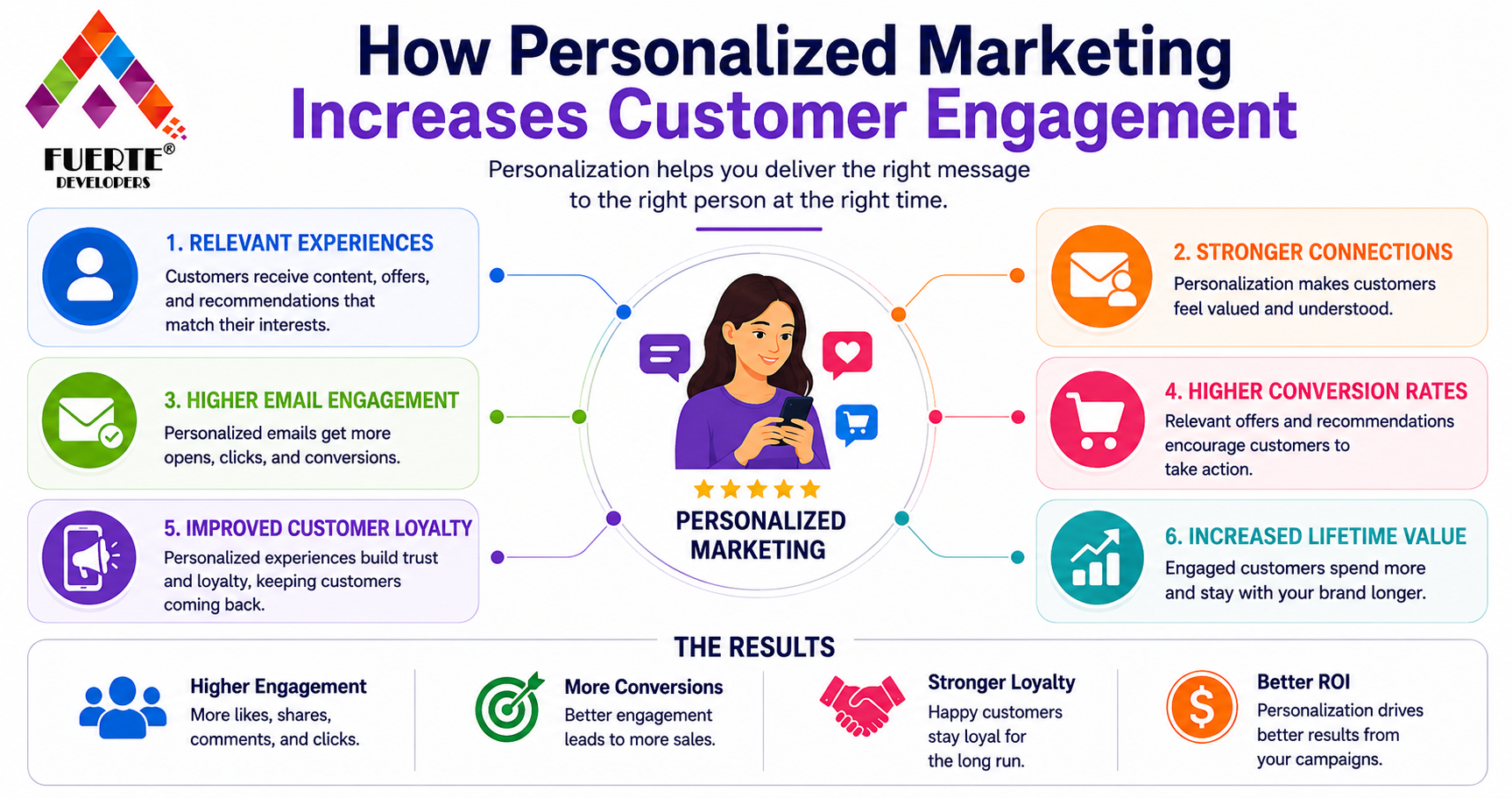
Digital marketing personalization is critical because of how it allows companies to create better, relevant, and meaningful experiences for customers. Companies can create personalized messages, promotional offers, and suggested products based on the customer’s interests, behaviors, and preferences instead of sending the same message to everyone. This makes customers feel valued and understood, which leads to more engaged customers, increases customer loyalty, and leads to increased conversions.
1. Strong Customer Engagement
Personalization marketing allows brands to connect with customers on a deeper level. For instance, when a company uses a customer’s name in an email or recommends products related to the customer’s most recent search, the customer feels a connection to the brand, and the message is perceived to be more relevant.
When customers are receiving messages that align with their interests, they are more likely to engage with the brand and respond to a call to action.
2. Increased Revenue
The more personalized the shopping experience is for a customer, the more likely they will be to purchase. Customers are also more likely to make a purchase when they receive targeted offers, product recommendations, and customized offers.
Personalization has a positive impact on repeat purchasing, increases the conversion rate, and overall profitability throughout the life of a customer.
3. Strengthens Brand Reputation
When customers get personalized services from companies, it makes them feel like they are being taken seriously and that the company is trying to provide them with great experiences. This allows brands to create a bond of trust with their clients, thereby creating strong emotional ties. When a brand provides consistent, relevant, and personalized service, it creates a positive reputation within the marketplace.
4. Improve customer experience
When customers get personalized experiences from companies, it makes the process of buying much easier. They feel valued and understand and therefore will be more satisfied, contributing to the formation of long-term relationships between the client and the brand.
How is Personalization Helping Businesses’ Digital Marketing Efforts?
While there are many ways for businesses to use personalization within their marketing efforts to support their customers’ purchase decisions, the critical impact of personalization is that it enables businesses to deliver the correct message, to the correct customer, at the correct time. This can lead to better results for businesses by improving how effective their marketing is.
1. Building Customer Loyalty and Retention
Using personalization helps businesses to understand their customers’ pain points and preferences when they purchase products from them. This understanding can lead to a stronger relationship with their customers through personalized communication, which will improve their customer’s loyalty to the business and will result in them returning to purchase from that business again. Customers are also likely to remain engaged with a brand that consistently delivers relevant experiences.
2. Driving Customer Satisfaction and Sales
Personalized marketing enables businesses to understand their customers better by using personalization to recommend products and services that align with a customer’s interests. This can lead to customer satisfaction, increased conversions, and increased sales from both the business to its customer and from the customer to the business.
3. Example of Using Personalization in the Real World
A leading eCommerce fashion brand was facing low customer engagement and poor repeat purchase rates despite running multiple online advertising campaigns. The company wanted to improve customer retention and increase sales through a more personalized shopping experience.
To solve this, the brand analyzed customer behavior, browsing history, and purchase patterns to create targeted customer segments. Personalized product recommendations, customized email campaigns, and special discount offers were then shown to customers based on their interests and shopping habits.
The company also used AI-powered recommendations to display products similar to items customers had previously viewed or purchased.
As a result, the campaign achieved:
- A 45% increase in repeat purchases
- A 60% improvement in email click-through rates
- A significant boost in customer engagement and overall sales
This example shows how personalization can help businesses deliver more relevant experiences, improve customer satisfaction, and achieve better marketing results.
How is Digital Marketing Revolutionizing Customer Engagement?
The way businesses interact with customers has been fundamentally changed by digital marketing. Businesses can create an improved customer experience by using customer engagement methods that enable them to build trust and loyalty with their customers and gain valuable customer information and input. For example, some ways that companies are using customer engagement tools include:
1. 24/7 Chatbots Provide Immediate Assistance
The first thing a visitor typically does when they arrive at a site is use a chatbot. Chatbots operate at any hour of the day or night and can generate immediate responses to visitors, search for information based on keywords, and return relevant information to generate assistance. The use of a chatbot helps a visitor get assistance through a conversation that provides answers, suggestions, and directions to other areas of the site that could be of interest to them.
2. Surveys Provide Targeted Customer Insights
Other customer engagement tools used by many companies include surveys. Surveys allow businesses to segment their customer base, collect relevant information about their customers, and provide insight into the strengths and weaknesses of their company’s products and services.
3. Live Chat Provides Interaction
Live chat is just one other method by which companies can engage with customers. Live chat allows for real-time communication between the businesses and their customers, allowing for a two-way exchange of information and allowing customers to reach out to a company’s customer service to seek resolution for their specific issues.
What Are the Challenges of Personalization in Digital Marketing?
As it relates to Digital Marketing, Personalization is becoming an increasing focus for brands since consumers are asking for and expecting a more tailored experience. While both of these items can improve a consumer’s level of engagement and satisfaction with a brand, they can also create significant areas of concern to be managed by a company.
1. Data Privacy and Security
There are a variety of privacy concerns involving the collection and storage of data about customers. To collect relevant information about a consumer’s experience with your brand, companies will typically collect data on their history of purchases, the manner in which they make their purchases, and their experiences with customer service. With the increase in cyberattacks and data compromises, customers are increasingly worried about the security of their personal information and the way it is utilized by companies.
To foster trust in your organization, companies must invest in maintaining adequate security, as well as providing consumers with transparency regarding the manner in which personal data will be utilized.
2. Revenue Impact from Data Restrictions:
Many firms have depended on customer data to be able to successfully carry out targeted advertising and marketing efforts. Unfortunately, the recent privacy modifications being implemented by a number of companies such as Apple and Google are curtailing the usage of third-party tracking and cookies. Businesses will have a more difficult time obtaining customer data as a consequence of these restrictions, which will have an impact on, among other things, their advertising effectiveness and revenue potential.
3. Building Trust with Customers
While customers desire personalized experiences through brands, they also expect to have their privacy protected. If customers feel that their personal information is being utilized too extensively in order to create an experience that is personalized, they may lose confidence in the brand. Therefore, brands need to provide their customers with clear disclosures on the ways in which they utilize their customers’ data to provide them with a personalized experience. Clear and honest communication builds stronger relationships between brands and their target audience.
How is personalization changing the future of digital marketing?
Despite the difficulties that come with personalization, it is still shaping the future of digital marketing.
1. Businesses are shifting to zero-party data.
Zero-party data is information that customers share with brands on their own accord (through surveys, preferences, and feedback). As third-party cookies are no longer available, brands are looking for ways to create a personalized experience without compromising the customer’s privacy by using only the data that their customers have given them.
2. Hyper-Personalization is growing.
Hyper-personalization is the use of technology to provide real-time, highly customized experiences. Companies are using AI, machine learning, and big data to create experiences that are tailored to the customer in real time.
Some examples of companies that have implemented hyper-personalization are Netflix and Kindle, which use information on how each customer uses their product to recommend content based on the customer’s preferences.
3. Omni-Channel Personalization
Modern consumers interact with a brand on multiple channels (web, mobile, social media, email, SMS, etc.). By using omni-channel personalization, brands can provide a seamless and personalized experience for customers. Omni-channel personalization increases customer engagement and creates a more connected brand experience.
AI’s Role in Personalization
Artificial Intelligence (AI) helps provide greater personalization through digital marketing. Companies like Netflix and Amazon provide personalized recommendations to customers based on their browsing activities, interests, and previous purchase habits.
In addition, brands can analyze customer behaviors using technology like face recognition, sentiment analysis, and predictive analytics. These tools help create meaningful experiences and improve customer satisfaction.
Brands have a number of options for personalizing the experience of their customers by using AI:
- Chatbots and live chat can automatically handle customer communication
- Recommendations based on the activity of users can be delivered to users
- Advertising to customers is made possible by using customer information
- Customer sentiment can be determined using sentiment analysis
- Creating interactive and immersive digital experiences
Personalization is now critical to Digital Marketing
Personalization has shifted from being a feature of digital marketing to being a necessity. It is now a fundamental expectation of customers that the brands they interact with will understand their needs and deliver an appropriate experience.
Businesses that focus on personalization will see increased customer engagement, improved customer loyalty, increased revenue, and strengthened customer relationships.
When brands do personalization properly, they can differentiate themselves from their competitors and establish long-term relationships based on trust with their customers.