



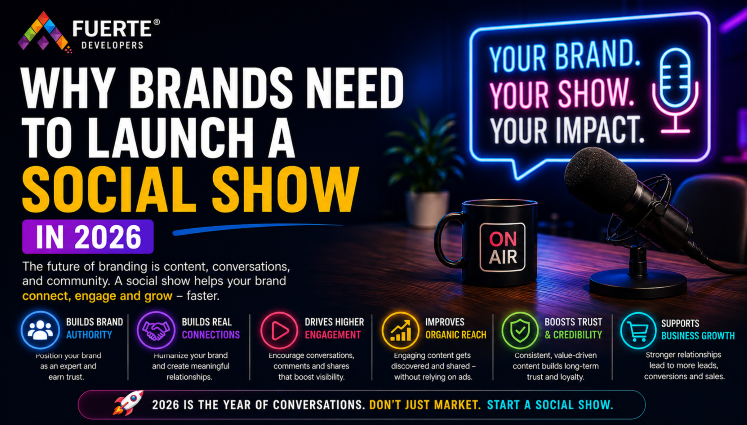
The most significant asset in the present economic climate is undoubtedly attention; brands are spending millions of dollars to gain consumers’ attention through various outlets (i.e., advertisements, influencers, and content), and yet so many struggle to create authentic engagement and loyalty among their audience. Even if a consumer sees an advertisement they deem to be visually appealing, they can have the same reaction when scrolling through a feed while reading or listening to interesting content with personality.
For this reason, social shows continue to rise as one of the fastest-growing methods for brands to connect with consumers.
Whether it’s podcasts, YouTube series, Instagram talk shows, or even LinkedIn video interviews, brands are increasingly being perceived as media companies rather than just selling products.
A social show creates an avenue for a brand to be able to tell their own story and build a relationship with their consumer.
Why Brands Need a Social Show
1. Content Consumption Has Evolved
The way people consume content is different now than it was before. Today’s audience does not prefer traditional advertising as they used to. They skip ads, scroll by promotional content, or ignore overly sales-driven messages. What captures attention today is authentic, engaging, and entertaining content that feels human. Because of this change, brands continue to invest in social shows (podcasts, interview series, YouTube shows, and discussion formats). Social shows allow brands to connect more naturally with the audience rather than consistently trying to make sales.
2. Social Shows Build Trust Faster
Trust is one of the primary reasons why brands succeed; social shows provide opportunities to deliver consistent value with insights, stories, conversations, and experiences—building trust over time. Consumers who view social shows recognize and appreciate the brand’s knowledge and trustworthiness. The recurring nature of social show content develops a longer-lasting relationship than advertising does, ultimately leading to more loyalty from consumers.
3. People Connect More With Personalities Than Logos
Consumers tend to have a greater connection with people than with corporate logos. A social show serves as a “face” and “voice” for your brand. It allows you to put a human touch on your brand by enabling the founders, creators, employees, or hosts of the business to engage directly with their audience in a personal and relatable manner. By engaging in this way, consumers develop a sense of connection and loyalty to your brand because they view it as more friendly and sincere. In the digital era, brands’ ability to develop authentic connections with consumers is crucial when trying to compete against polished marketing campaigns.
4. A Social Show Creates Endless Content
The launch of a social show provides an extensive amount of opportunity for repurposing content. An individual episode can generate multiple pieces of content that can be used across various social media platforms. For example, brands can take the audio from one episode and create IG Reels, YouTube Shorts, LinkedIn updates, blog posts, and quotes and shorten them into small social media clips. This allows brands to be consistent in their messaging across various platforms while also being able to create a streamlined marketing process by saving time and broadening their reach.
5. Improved Interaction and Organic Reach
Social media platforms favor content that maintains user interest for extended periods. Social shows naturally accrue comments, shares, saves, and conversations, thus enabling increased visibility through their algorithm. As compared to more traditional promotional content, shows typically generate much more engaged audiences. This is primarily because shows provide more entertaining and valuable experiences to the audience. Brands can develop an audience free of the reliance on advertisements through the use of shows.
6. Developing a Dedicated Community
Using a social show helps build a true community of followers who have an emotional connection to the brand through the regular viewing, interacting, and engaging with shows. Viewers develop an affinity for the brand and return to see the next episode, take part in conversations, and spread the word about the show. Such brand loyalties are vital in today’s highly competitive digital landscape.
7. The Future of Branding Is Content-Driven
Top brands today are functioning more like media firms as opposed to product-focused entities. These brands are developing high-quality content in lots of different forms (e.g., graphic, video, text, etc.). They do this in order to create a lasting impression on their customers and provide them with meaningful experiences. By creating a social show, brands can remain relevant and have an opportunity to increase visibility and build lasting relationships with their customers. In an era where digital competition is increasing, brands that are able to consistently keep their audiences engaged will have an advantage over other brands.
Major Benefits of Launching a Social Show
1. Increased Brand Awareness
Social shows allow brands the opportunity to have a consistent presence across various channels such as LinkedIn, Instagram, YouTube, and TikTok. By sharing value-adding content over time, viewers will recall the brand not based on the ad they saw but see the brand as memorable due to the entertaining content they watched.
2. Stronger Audience Trust
Trust is a key reason why social shows are effective. By providing value through candid conversations, industry insights, education, or simply ‘real life’ experiences, companies create an emotional connection with the viewer that goes beyond ‘traditional’ marketing.
3. Improved Interactivity on Social Media
The nature of social shows encourages interactivity through comments, shares, discussions, and reactions, which is higher than what typically occurs with promotional type postings, which can be easily overlooked. The higher level of interactions will result in increased organic reach as social media sites are more likely to share engaging content with their extended community.
4. Endless Content Idea
With one episode of a social series, you’re able to repurpose that one episode into many different content types. For example: You could take a single podcast episode and create posts that include social media reels, short video clips, and written blog posts, as well as quote format, carousel format, or audio format (podcast). By creating multiple differences types of content from one source of content, it will make the processes of creating content easier to do and consistent, therefore ensuring consistency across platforms
5. Building Community
A social series can help establish a loyal community for a brand versus only having a lot of followers. Regular audience members who watch the series religiously will start to feel like members of the company and will want to watch the new episodes whenever they come out, resulting in elevated audience loyalty and customer retention over time.
6. improved Brand Authority
Continuously publishing high-quality, educational, and informative content through the social series will allow the brand to be recognized as an authority within its respective industry. In addition to establishing the brand as an authority in its given industry, regularly providing quality content via a social series will position the brand as a trusted source of information and ideas to those associated with the brand.
7. Long-Term Business Growth
Social shows function not only as a means of producing content; they also serve as comprehensive branding devices. These types of shows provide companies with enhanced visibility, greater consumer trust, greater levels of organic exposure (without paid promotions), and greater ability to create stronger relationships with their audience members. All these benefits ultimately lead to greater brand equity and more significant business expansion over time.
Conclusion
Producing a social show has progressed from being merely a fad to an invaluable part of creating a strong brand image for a company. By leveraging the power of educating, entertaining, or connecting with their audience using appropriate forms of content, companies can develop lasting trust and interest from their client base; increase their ability to engage with customers regularly; produce short-term content; create consistent content; and create greater single-user engagement potential among their customer base. Because of these benefits, the companies who develop successful social shows will continue to grow faster than those whose growth is reliant solely upon traditional advertising methods.


