


Think about spending a fortune, possibly even more than a fortune, on digital marketing initiatives in order to attract customers, only for those same customers to disappear after placing their initial order with you. Unfortunately, this is how companies operate in today’s market. Businesses tend to invest large amounts of money in acquiring new customers but neglect to take care of existing ones.
According to a study performed by Bain & Company, the rise in customer retention by even 5% is sufficient for increasing the profits by 25% to 95%. This can be explained by the fact that the customers know your brand and product well enough, thus requiring less persuasion.
As a result, email marketing becomes more than just a way to advertise a product. Email marketing becomes the bridge between you and your customers, thus allowing you to build long-term relations with them and provide a continuous value to them. Regardless of whether you run an eCommerce or B2B project, an email marketing campaign will help you increase customer retention and revenue.
In the following article, we will review some of the examples of effective email marketing campaigns.
Why Repeat Customers Matter More Than You Think
A lot of companies assess their success by looking at how many new customers they get each month. Although customer acquisition is necessary, it is not enough to ensure long-term growth.
Consider your favorite café. Most likely, you buy coffee there not to get daily discounts, but because you are sure about the quality of the products and the service. The same philosophy applies to online companies. Happy customers are likely to keep buying from you, especially if you let them hear from you regularly.
A good illustration of this concept is Amazon. After you buy something, the company does not stop communicating with you. Instead, it sends order confirmations, shipping alerts, recommendations, requests for review, and personalized offers based on your browsing history.
Email marketing allows businesses of any size to create such experiences. It does not focus on making sales; rather, it stimulates communication.
Build Relationships Instead of Sending Promotions
One of the biggest blunders that companies make in email marketing is treating the entire process like a digital brochure. With every week that goes by, subscribers get another email announcing a sale, discount, or limited-time offer. Although infrequent promotions can be useful, the customers will lose interest quickly once they discover that every email is asking them to make a purchase.
Successful companies have realized that value must come before selling.
Take a look at companies like Grammarly and see how they nurture their users. Their emails are usually made up of writing tips, productivity tips, and feature suggestions instead of sales offers in every email. By doing this they manage to keep the customers interested and provide them with a sense of the value offered by their product.
Retail companies can use the same approach in their emails as well. For example, if a fashion company sends out styling tips on how to wear the items that were purchased, a furniture store can share ideas about home decoration. A skincare company can show how to achieve the best results when using its product.
Personalization Is the Difference Between Being Opened and Being Ignored
Every day, customers receive multiple marketing emails. Many ignore those emails, as they feel bland.
This is where personalization comes into play.
There is now much more than simply inserting a person’s first name in an email when it comes to contemporary email marketing. Nowadays, businesses can personalize their emails according to customer purchase history, on-site behavior, favorite products, their location, and other factors.
For example, when a person orders running shoes from an online store, there is no need to present that person with anything irrelevant. Instead, a business can suggest proper socks and other running gear to the customer.
The best example of a personalized marketing campaign is the annual “Wrapped” campaign from Spotify. Instead of creating a private message for each customer, Spotify creates custom messages based on their music preferences. The approach leads to extensive engagement, as each person gets a feeling of personalized communication.
At the same time, businesses do not have to spend tons of money and use the same approach as Spotify to benefit from personalization. Even simple recommendations based on the previous purchases will significantly increase the click-through rate and lead to more sales.
Automation Keeps Your Business Connected Even When You’re Offline
Think about hiring a worker whose focus would only be contacting customers at the right time. This worker will welcome new customers, appreciate buyers, tell when people need something to be substituted, recover forgotten carts, and come back to those who have not purchased anything for a long time.
In simple terms, it is what email automation is.
After the working process is automated, no further efforts are being spent to keep everything running without anybody’s supervision.
Let’s say, when someone buys a coffee maker, the first message sent out might be the confirmation of the order. Then comes another message that should inform the customer about keeping the coffee maker working in optimal condition. In a couple of weeks, the customer might get a message about premium beans and attachments. After some months, a reminder should be sent about changing the cleaning and maintenance materials. Each message comes at its time as it fits the customer’s journey instead of being sent according to the marketing calendar.
Automation increases business efficiency because customers get messages when it is the most relevant for them.
Small Improvements Can Lead to Significant Revenue Growth
It is a common belief among the corporate world that companies need to increase the number of subscribers to their email lists in order to sell more. However, the truth is that communicating effectively with the audiences produces more positive results than merely getting the larger number of subscribers.
Testing is an essential part of this process. Simple actions such as changing the subject line, adjusting the time of sending an email, or rewriting the call-to-action may significantly increase engagement with the audience. These seemingly small improvements have a cumulative effect that can increase open rates, click-through rates, and the rate of repeat purchases.
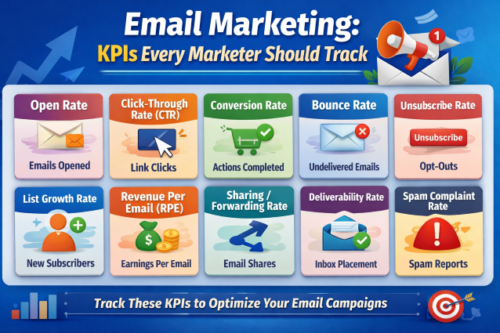
Another key point is to focus on the relevant metrics rather than count vanity numbers. Open rates are interesting statistics, but they do not directly correlate with profitability. The company should aim at increasing the repeat purchase rate, customer lifetime value, conversion rate, and eventually the revenue generated by emails.
If these metrics improve, one may be confident that the email strategy is strong enough to enhance relationships with the customers rather than just increase the emails sent.
Conclusion
Email marketing is still one of the most profitable marketing channels due to one reason: it provides a connection that every successful business must have. strong customer relations. It is important to get new customers, but in order to grow in a sustainable way, brands have to keep bringing value to consumers after their first purchase.
Instead of just sending promotional emails, successful companies prefer to offer useful information and help the customers while they make the purchases. Each email that has been carefully prepared does not only help create trust and improve recognition but also allows customers to buy from the brand again.
If you have been using only discounts and newsletter emails, it’s high time to change your approach. Instead of starting campaigns, enjoy conversations, help customers instead of sending them countless promotional emails, and make use of automation to make sure that you send them the right message at the right time.