


Digital marketing is changing rapidly due to artificial intelligence, and the way companies are thinking about automation, personalization, and ethical use of AI is being guided by companies such as Anthropic. As AI continues to be developed into a more intelligent human-like machine, marketers are beginning to develop marketing strategies that create a trusting relationship with their customers, creating emotional connections with their customers and providing their customers with intelligently designed customer experiences.
Anthropic is focused on creating safety and transparency and responsibly innovating when it comes to AI. These principles are presently driving current digital marketing trends that are changing the way brands engage with customers online.
The Use of AI in Customer Interactions
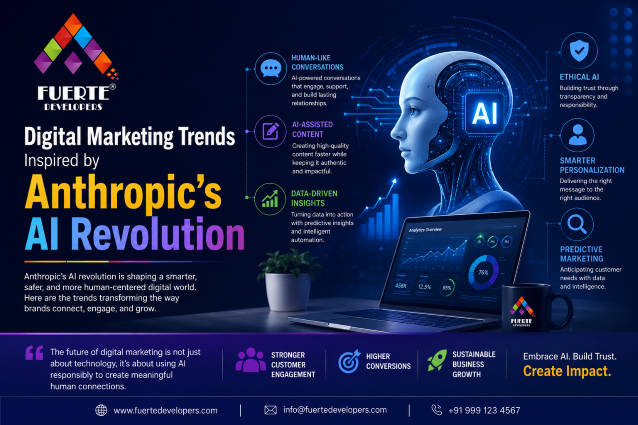
With today’s advances in communication technology include AI tools that foster human-like interactions with customers through customer service. Brands are now utilizing AI chat assistants and automated support systems powered by AI technologies that enable them to better understand context, intent, and the behavior of users than traditional chatbots could.
In turn, brands are designing ways to provide their customer interactions to be more personal and individualized and, therefore, create a sense of normal person-to-person communication. It is now expected that customers will respond positively to a brand’s ability to provide that type of experience and, as a result, provide faster and better engagement with their customers through their websites, mobile apps, and social media channels.
Smarter Personalization
Marketing strategy is now moving away from generic types of marketing campaigns towards highly personalized experiences. Using real-time data analysis tools, AI systems can analyze and collect information related to a customer’s browsing, search, social media, and purchase activity in real-time as they browse online articles, blogs, websites, and apps.
Using technology that analyzes and predicts what content will be most relevant and valuable for an individual, brands have been able to provide customers with personalized content, including recommendations and advertisements. Because of this, it is increasingly expected by consumers that brands will be able to understand the interests and preferences of their customers without creating an intrusive experience.
The challenge for marketers is balancing personalization with privacy and transparency.
Ethical Marketing and Consumer Trust
As AI grows stronger in its capabilities, consumers are beginning to pay greater attention to how businesses utilize their data and what their ethical stance on this subject is. This has led to an increase in demand for ethical marketing practices as well as clear and available means of communication from brands.
Brands that employ responsible AI principles are positioning themselves to provide:
- Clear privacy policies
- Honest advertising
- Transparent AI usage
- Respectful data collection
Trust is rapidly building into one of the most prized assets for digital marketers. Businesses that misuse AI technologies or engage in manipulative techniques will suffer from poor reputations and lack of consumer confidence.
AI-Assisted Content Creation
AI content creation is becoming integrated into marketing strategies at the highest level. Brands are increasingly using AI-based technologies to assist in the production of blogs, social networks, ads, email campaigns, and video scripts, creating content exponentially quicker than previously possible.
However, leading brands recognize that AI can enhance creative processes by acting as a partner and not replacing the creative process of the brand. Consumers still requested originality, personal connection to the story, and authentic voice from the brands they follow.
The future of content marketing will likely incorporate the expertise of an AI-generated solution in tandem with the brand’s creative talent to create memorable and digitally palpable experiences for its customers.
Predictive Marketing and Data Intelligence
One of the most beneficial uses of advanced AI applications is the ability to forecast how customers will act. It allows AI to identify patterns and is used to forecast how products will sell or how consumers will behave in the future.
By identifying trends in this way, marketers can target their advertisements more effectively, save money by reducing wasted ad spend, and create marketing campaigns to reach the correct customers at the appropriate time.
As a result of these advancements in AI, predictive marketing is changing many digital marketing programs from being reactive to proactive and developing a better customer experience throughout the consumer’s life cycle.
AI-Enabled SEO & Search Evolution
The use of AI technology in search engines is also changing how searches are being conducted. The search algorithms being utilized today are more focused on the context of the search, the intent of the person searching for something, and the conversational patterns of people when they search, rather than only focusing on the keywords that appear in a search.
Because of this, SEO is now evolving quickly, and brands must generate more content that is useful and/or informative for consumers while also ensuring that their content is written with human beings in mind. Thus, search visibility will be determined more by having quality content, being optimized for semantic search, and being ready for voice search technologies.
If the consumer can use an AI-enabled search engine, marketers will lose out on having an effective search strategy if they use outdated methods of conducting SEO.
The Future of Responsible AI Marketing
Anthropic’s AI revolution demonstrates an important lesson; moving forward with all forms of digital marketing, more than just utilizing technology to automate processes, we must be innovative in ways that are responsible.
The businesses that prevail over the next several years will be those that utilize AI to enhance their customers’ experiences while having a commitment to transparency and ethical standards.
As consumers become more acquainted with how AI impacts their online interaction with brands, they will demand those brands use AI responsibly and exhibit due respect for trust as they make informed decisions regarding all aspects of their online shopping experience.
Conclusion
AI has changed the way digital marketing operates by creating smarter personalizations through predictive analysis and AI technology. However, long-term success in this field will depend on more than just having the latest technology available.
The winners will be those companies that apply AI technology against their own creative process, social responsibility codes, and customer trust, not just their business model. Responsible marketing could ultimately be the greatest competitive advantage that could come from continuing to properly use AI.