


For service businesses like plumbers, clinics, lawyers, restaurants, consultants, and home service providers, online marketing can feel like pouring money into a black hole. You spend on ads, you hire SEO agencies, and you boost posts, yet calls don’t increase the way you expect.
The problem usually isn’t SEO vs PPC itself.
The real issue is how businesses use them and where they unknowingly waste money.
Understanding SEO vs PPC
Let’s clarify SEO and PPC before discussing common errors people make.
SEO (Search Engine Optimization)
- Long-term strategy
- Focuses on organic traffic
- Builds authority, trust, and consistent leads
- Results take time but compound over months/years
PPC (Pay-Per-Click Advertising)
- Short-term, fast results
- You pay for every click
- Great for instant visibility and testing offers
- When you stop paying, the traffic stops.
A mistake people make is seeing SEO and PPC as enemies instead of partners.
Big Picture Mistake: Choosing SEO or PPC Instead of Using Both
Many service businesses fall into one of these traps:
- “SEO is slow, let’s just run ads.”
- “Ads are expensive, SEO is enough.”
Both approaches leave money on the table.
Smart strategy:
- PPC can quickly bring in leads.
- SEO builds traffic that’s affordable in the long run.
- Info gotten from PPC can improve SEO (keywords, messaging, intent).
Now, let’s get into the mistakes that waste your money.
SEO Mistakes That Drain Your Budget
Many service businesses put money into SEO, wanting good results, but they waste their money because they make some key errors. Mistakes like these can hold back company expansion and slowly drain your funds each month.
A typical issue is targeting keywords. Businesses often pursue common words that seem attractive but draw in users who aren’t ready to buy. Getting a high rank for common keywords might bring more people to a site, but if those people aren’t looking for what the business offers or aren’t in the right area, they aren’t likely to become customers.
Another thing that wastes money is not paying attention to local SEO. Service businesses rely a lot on customers nearby, but many don’t make their sites visible in local searches. If a business doesn’t have a complete Google Business Profile, doesn’t have pages for specific locations, and doesn’t focus on getting customer feedback, it will lose visibility where it matters most. This forces businesses to spend more on advertisements to make up for the organic traffic they should already have.
Many companies create content that draws in readers but fails to convert them into paying customers. For example, blog posts designed only to rank high on search engines, without clear calls to action or links to your services, don’t really help your business. Content aimed at search engine ranking should encourage people to book a service, call you, or ask for a quote, instead of just reading and leaving.
Another mistake that costs money is expecting SEO to produce fast results. SEO takes time and is not a quick solution. Businesses that give up on their plan after only a few weeks lose both time and money and often have to begin again later. Staying consistent and being patient is what makes SEO a growing advantage.
Lastly, many service businesses don’t keep track of what is actually working. If they don’t watch keyword success, traffic patterns, and how many people become customers, SEO becomes a guessing game. This leads to continued spending on pages that don’t work well, while good chances are missed.
When these mistakes are fixed, SEO stops being an expense and starts to become an affordable way for service businesses to create leads.
PPC Mistakes That Burn Cash Fast
PPC can quickly bring in leads for service businesses. Poor handling, though, can make it a fast way to waste marketing money. The biggest trouble isn’t the platform itself, but a poorly planned, tracked, and handled ad strategy.
One costly mistake is sending ad traffic to the wrong pages. Many businesses send ad clicks to their homepage or a service page without focus. Without a clear message, good offer, or visible call-to-action, visitors leave without becoming customers, making each click a waste.
Another problem is targeting wide or low-intent keywords. These keywords might bring much traffic, but they often get users who are just looking around. This leads to high click costs and poor rates of turning visitors into customers. Service businesses do better when ads center on high-intent searches from users actively trying to book or contact a provider.
Many businesses also lose funds by not tracking conversions well. Without tracking phone calls, form submissions, WhatsApp clicks, or bookings, you can’t know which ads bring real leads. Then, choices are based on clicks instead of results, keeping bad campaigns running.
Another money-waster is failing to handle campaigns regularly. PPC isn’t a one-time setup. Ads, keywords, and bids need constant work. Campaigns that run without changes for weeks or months slowly become less useful, raising the cost per lead without improving results.
Lastly, service businesses often wrongly run PPC alone. When ad data isn’t used to improve landing pages, messaging, or SEO, good ideas are wasted. PPC should guide broader marketing choices, not be a separate cost.
When pay-per-click advertising is done right with focused ads, good landing pages, tracking, and regular work. It becomes a strong way to get leads, instead of just wasting money.
The Biggest SEO vs PPC Mistake: Keeping Them Separate
SEO and PPC teams usually work apart. That costs money.
Here’s a better way:
- PPC data shows:
- Keywords that convert best
- Headlines that perform best
- SEO uses this info for:
- Blog topics
- Page titles
- Service pages
- At the same time:
- SEO keywords with high engagement
- Can be tested in PPC campaigns
This helps avoid waste and boosts your return on investment.
How Service Businesses Should Actually Spend Their Marketing Budget
Here’s a smart, balanced approach:
Early Stage or New Business
- 60% PPC (quick leads)
- 40% SEO (foundation building)
Growing Business
- 40% PPC
- 60% SEO
Established Local Brand
- 30% PPC (remarketing & high-intent searches)
- 70% SEO (dominant organic presence)
The goal is lower cost per lead over time, not endless ad spend.
Here’s a clean, bullet-free conclusion, rewritten smoothly and with Fuerte Developers’ services naturally integrated:
Conclusion
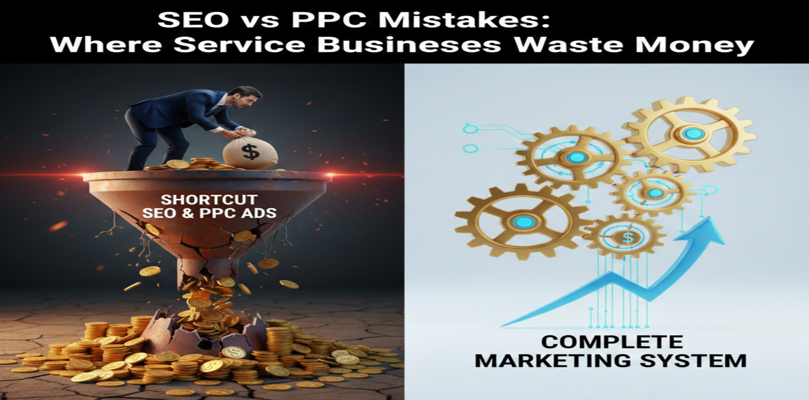
SEO and PPC are not opposing strategies they are two sides of the same growth engine. Service companies waste money when they see search engine rankings and pay-per-click ads as shortcuts rather than complete systems. It throws money away and misses opportunities when businesses chase quick wins with ads but don’t track things well or invest in SEO without a clear plan and local focus. Growth happens when businesses understand how each channel fits and how they help each other.
PPC offers speed, visibility, and fast leads. SEO builds long-term authority, trust, and sustainable traffic When you use them together with a good plan, there is a cut in how much you pay for each lead. You will improve the quality of conversions and see business growth you can predict. The real mistake isn’t spending on marketing. It’s spending without a plan, clear goals, and a system for making things better.
If your business spends money on marketing but doesn’t see good results, it’s time to stop guessing and start planning. With the right mix of SEO and PPC planned, tracked, and improved the right way, you don’t just get visitors. You get real customers. And with Fuerte Developers as your growth partner, every marketing rupee works harder toward building a profitable, scalable service business.