

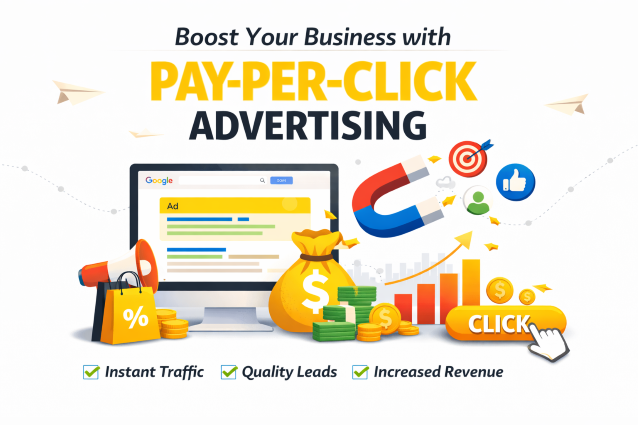
Many different forms of advertising are now being used by marketing agencies to achieve their aim of reaching a specific demographic group in the best possible way. With so many different types of advertising and methods available in today’s advertising world, deciding which type of advertising is right for a business can be challenging. However, paid search (PPC) advertising is one of the most popular and successful online advertising types available for businesses looking to improve their website’s traffic and visibility. Additionally, PPC is a measurable and cost-effective way for a business to reach potential customers who are currently searching for products or services similar to theirs.
PPC will allow an advertiser to bid on specific keywords and only pay for the clicks that their ads receive. This creates immediate results and will help an advertiser to precisely target, track, and optimize their ads to improve their PPC campaign’s overall performance.
What is Pay-Per-Click (PPC) Advertising?
Pay per click involves the payment of fees through clicks. When you pay for an advertisement to be placed online, the advertiser will pay you each time someone clicks on your ad. Pay per click is considered an internet marketing strategy where sites and online products pay certain amounts of money every time their ad is visited by someone, as opposed to receiving traffic from search engines as a result of being optimized for those sites.
Ads can be found on search engines and social media, as well as other websites, based on whether those websites will allow advertisers to post ads or not.
Types of PPC Ads
There are multiple categories of PPC advertising; here are some of the most widely known forms of pay-per-click advertising:
1. Display Advertisements: Display ads may show up in the form of banner ads, images, or video ads. Usually, display advertising is used to promote the awareness of a brand.
2. Shopping Advertisements: Shopping ads are applied to search engines where a user will be presented with a product image, price, and an option to go visit your store. As such, e-commerce websites often find this form of advertising beneficial, as they can use shopping ads to drive traffic to their respective websites and sell their products.
3. Social Media Advertisements: Social media ads are displayed on social media platforms (e.g., Facebook, Instagram, Twitter, and LinkedIn) through users’ feeds, Stories, or the sidebar. Social media ads boast significant degrees of targeting ability.
4. Video Advertisements: Video advertisements are displayed on video communities (e.g., YouTube). These ads may show before/during/after the video and are ideal for businesses that possess compelling video content.
5. Search Advertisements: Search ads are text-based only and show up after users conduct searches using the relevant search term/keywords. Search ads are likely the most common and most effective form of PPC advertising.
How Does PPC Work?
PPC is a method of advertising where businesses bid against one another in order to have their ads shown. The following steps are involved in PPC:
1. Keywords: Advertisers determine the keywords they want to target based on their business type and product or service they sell. The keywords a person types into a search engine will be the word(s) they are looking for.
2. Ad Auction: When a person does a search for a specific keyword, an ad auction occurs. If an ad is deemed to be relevant to the search and the advertiser’s bid price is what can be called “competitive” (i.e., the highest), the ad will show up on the SERP.
3. Pay for Click (CPC): Advertisers only pay for the clicks they receive on their ads. The CPC charged by Google will vary based on many factors, including how many advertisers are targeting that same keyword, the quality score of the ad, and many others.
4. Ad Creation: The next step after identifying the keywords is for advertisers to create the actual ad that will show up when those keywords are searched.
5. Bidding on Keywords: Advertisers indicate how much they are willing to pay per click for their ads to participate in a keyword auction. This price is one of the determining factors in where the ad will show up on the SERP or a publisher’s website.
Why is PPC important?
The use of PPC advertising is highly beneficial today, and there are many reasons behind this.
- For starters, PPC advertising generates immediate results; unlike SEO, which can take time before resulting in an increase in traffic, PPC advertising delivers immediate traffic after launch.
- PPC advertising offers advertisers the ability to target users based upon key demographic characteristics such as age/gender/location/time of day/working hours, etc., and allows marketers to serve ads specifically to different groups of users. This level of targeting means that you can reach only those users who are likely to convert into paying customers/sales.
- PPC allows advertisers to monitor and track their advertising efforts through their PPC account, making it easy to analyze how well their ads performed in terms of clicks, conversions, and actual sales.
- When users see PPC ads displayed on Google and other sites (regardless of whether they click on them), they become more familiar with the brand associated with that advertisement; thus, when they search again in the future using another search engine or enter a keyword related to your brand into the search box(es) of other search engines, you have a greater chance of them clicking on your ad the next time they do an online search, which may result in additional conversions/sales.
Finally, advertisers can establish budgets for PPC advertising campaigns that enable them to have control over how much they spend and can continue looking for ways to improve their return-on-investment from their advertising dollars by evaluating their results from ads served without exceeding their established budget limits.
PPC vs SEO: Which is Better?
| Feature | PPC | SEO |
| Speed | Instant | Slow |
| Cost | Paid | Organic |
| Results | Immediate | Long-term |
| Control | High | Medium |
Best strategy: Use BOTH together for maximum impact.
Top PPC Advertising Platforms
- Google Ads
- Facebook Ads
- Microsoft Advertising (Bing Ads)
- LinkedIn Ads
- Twitter Ads
- Amazon Ads
Conclusion
PPC (Pay-Per-Click) Advertising isn’t just about spending; it’s about investing wisely with data that shows measurable results. When PPC is executed effectively, it allows you to instantly generate traffic to your website, generate quality leads that are truly interested in your products or services, and maximize your overall revenues. With PPC advertising you have the ability to move quickly, accurately target your audience, and use complete control over your marketing efforts. If you want fast results while having flexibility and tracking performance, PPC is one of the best and most powerful ways to help you grow your business.